
Fathulla (Bek) Shakirov
1960 — Tashkent (Uzbekistan). Worked in Tashkent (Uzbekistan), currently works in New York, NY (USA)
After graduating from the Benkov Republican Art College (now the P. P. Benkov Republican College of Arts) of the Uzbek Republic, Fathulla Shakirov enrolled in the Surikov State Art Institute in Moscow, studying in the studio of Tahir Salahov, one of the leading representatives of the so-called severe style, from 1980 to 1986. After the collapse of the Soviet Union, like many other young artists of various republics, Shakirov took advantage of the opportunity to travel abroad and work with foreign galleries.
His early work is connected to artists of Tashkent’s underground, who exhibited in Ilkhom Theater, the first privately run theater on the territory of the Soviet Union. The renewal process for Soviet society and culture that started in the era of perestroika and glasnost (1985–90) had effects on the art of Uzbekistan. Along with his colleagues, Shakirov contributed to the liberation of his nation’s art from old Soviet dogmas and restrictions.
Shakirov’s artistic pursuits following his graduation were distinguished by freedom and dynamism. Ignoring Soviet themes and imagery, the young artist began to master various movements of Western modernism. The paintings he made from 1987 to 1990 attest to how confidently he left behind figuration and other academic requirements.
In the works of his early period—Spring of My Youth (1989), Golden Lion (1989), and Simurgh (1990)—Shakirov attempted to find the expressivity of abstract forms. His compositions included fragments of Samarkand’s architectural ornament, making references to cultural memory and symbols he had known from childhood, such as the golden lion and the simurgh, a benevolent bird from Persian mythology. The rich traditions of the East manifest in both the brightness and the harmony of his palette.
When he moved away from national identifiers in painting, Shakirov pursued the international languages of pop art and abstraction, which characterize the painting Dedication to Rauschenberg (1989). In the spirit of pop art, he used well-known Soviet symbols and emblems, distributing them along the edges of expressive abstraction like narrative panels in medieval Russian icon painting. Dedication to Rauschenberg was exhibited at Pervaia Gallery in Moscow along with works by other young radical artists, whose work reflected the dynamic cultural transformations that took hold of society in those years.
Paintings from Shakirov’s early period, such as The Ocean in Me (1988), Eternal (1989) and Awareness (1989), attest to the confidence with which he built his path toward American expressivity. His painting demonstrates traits of abstract expressionism with its bold, gestural strokes, rhythmic patterns, and bright colorful palette. Yet the improvisational spontaneity of the young artist’s brush did not interfere with the clarity of his compositions or the purity of his contrasting colors. The vital force of bright red and the energy of the linework come from the artist’s profound connection to the essence of nature. Nature and the energy of freedom become metaphors for the tectonic shifts in the history of a society being reborn. Uniting the methods of abstract expressionism with symbolic, rhythmic compositions, the artist not only takes part in the global dialogue of modernism, but also expresses a deep visual meditation on a society in motion. In the context of Soviet art of those years, the turn to abstraction was a sign of freedom and independence. In this way, Shakirov’s work is not only a reflection of his personal artistic evolution but also an idiosyncratic artistic document of an era of change.
After the fall of the Soviet Union, Shakirov emigrated with his wife, Khurshida Kamalova (Lola Kamal), a talented artist and his longtime collaborator. Moving to New York in 1991 marked the beginning of a new stage in their life and practice. Shakirov has lived and worked in New York ever since. The new creative environment presented the artist with diverse opportunities to realize his ideas. It helped him uncover a rich range of creative possibilities and various contemporary mediums. Settling in and putting down artistic roots in the city, in 1994 he joined the Society of Illustrators in New York.
In the early 1990s, Shakirov’s abstract paintings caught the attention of Stolichnaya, the vodka company, and he and Kamalova were hired to design a global campaign for the brand. Advertisements inspired by the Russian avant-garde were published in more than 200 magazines around the world. The project culminated with an exhibition by Shakirov at Forbes Gallery in New York in 1996.
The fashion boom of the 1990s heralded a turning point in the artist’s career. His work for the brands Ralph Lauren and Tiffany & Co. drew the artist into the world of design. His successful partnership with Wathne, the former luxury brand that had an elite boutique on 57th Street, led to the presentation of his and Kamalova’s designs in Saks Fifth Avenue. This success inspired Wathne to entrust Shakirov and Kamalova with creating seasonal collections, including the exclusive Samurai Collection for Wathne’s store in Tokyo’s Ginza district. All the items in the collection were painstakingly hand-decorated and fabricated using traditional silkscreen methods that the artists studied in Japan.
From 2001 to 2004, Shakirov studied digital art at New York University, receiving a master’s degree. Shakirov and Kamalova (known by her nickname Lola) constantly expanded their creative opportunities, making video clips for famous clients, including Jersey Gardens, Millennium Hotels, Sony Music, Playhouse Disney, Nickelodeon, Microsoft, and MTV. In 2004, the two established the digital studio Lola & Bek and embarked on successful collaborations with publications such as the New York Times, Forbes, the Washington Post, and the Los Angeles Times. In 2024, New Jersey’s division of travel and tourism hired Shakirov for their advertising campaign Wow. His vivid works were displayed prominently on thirteen screens in Times Square in April 2024, entrancing audiences right in the center of New York.
In 2005, while mastering new media, the pair made the animated film Bibi, which was shown at forty-six film festivals around the world and won international recognition. In 2006, at the Sapporo Short Fest in Tokyo, they won the prize for best animated short, which led to recognition of the artist’s work in Japan. The country’s cultural traditions of ukiyo-e, the aesthetic of the kimono, and the theatrical styles of no and kabuki had an enormous influence on the collaborative work of the artists. Today, they have an original style that organically synthesizes the aesthetics of Central Asia with the dynamic new media of the West.
Nigora Akhmedova
Translated from Russian by Brian Droitcour
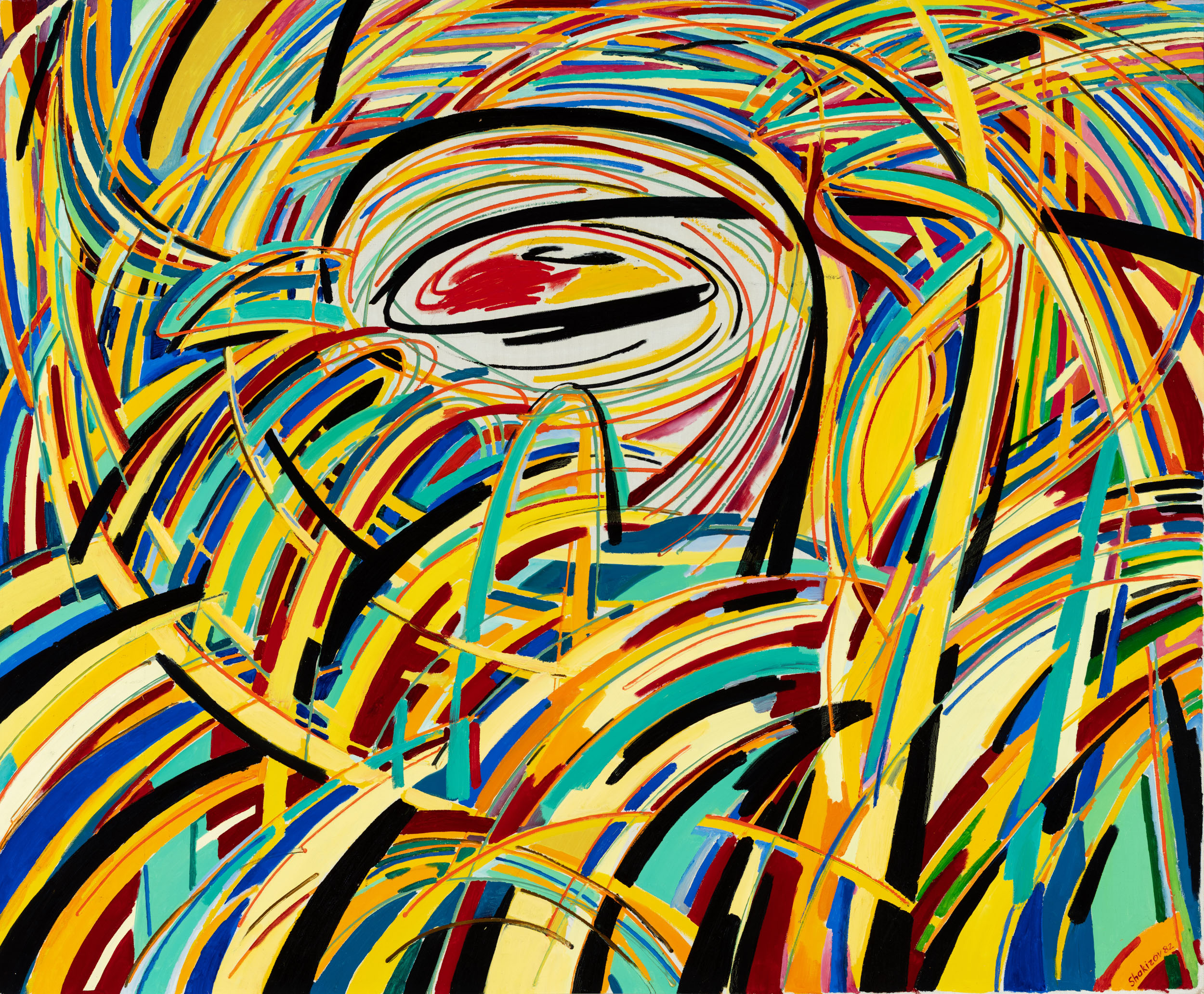
The Wave, 1982. Oil on canvas, 140 × 169 cm (55 1/8 × 66 9/16 in.). Norton and Nancy Dodge Collection of Nonconformist Art from the Soviet Union. D04723
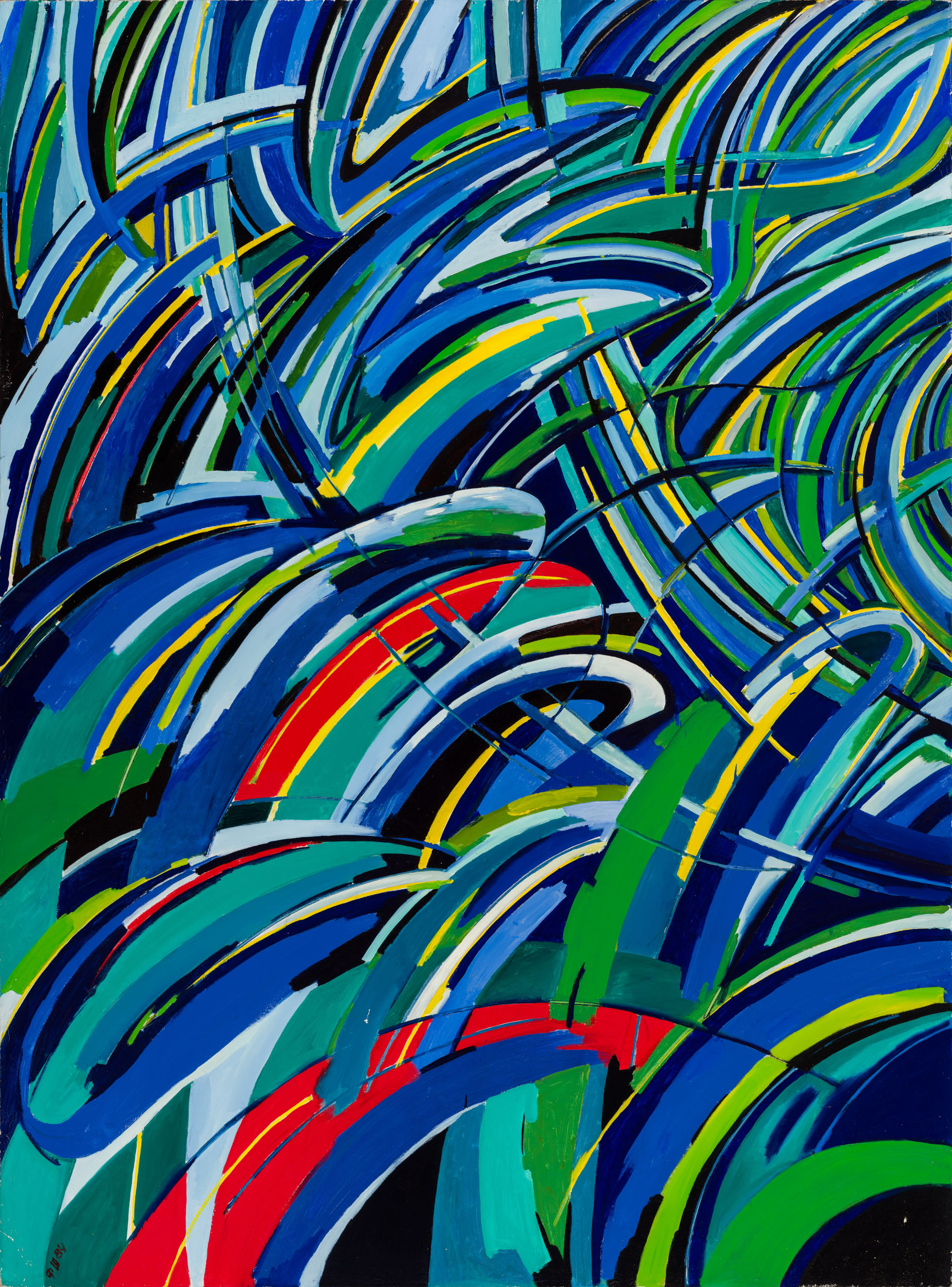
Composition I from the series Tashkent, 1984. Oil on canvas, 190 × 141 cm (74 13/16 × 55 1/2 in.). Norton and Nancy Dodge Collection of Nonconformist Art from the Soviet Union. D04860
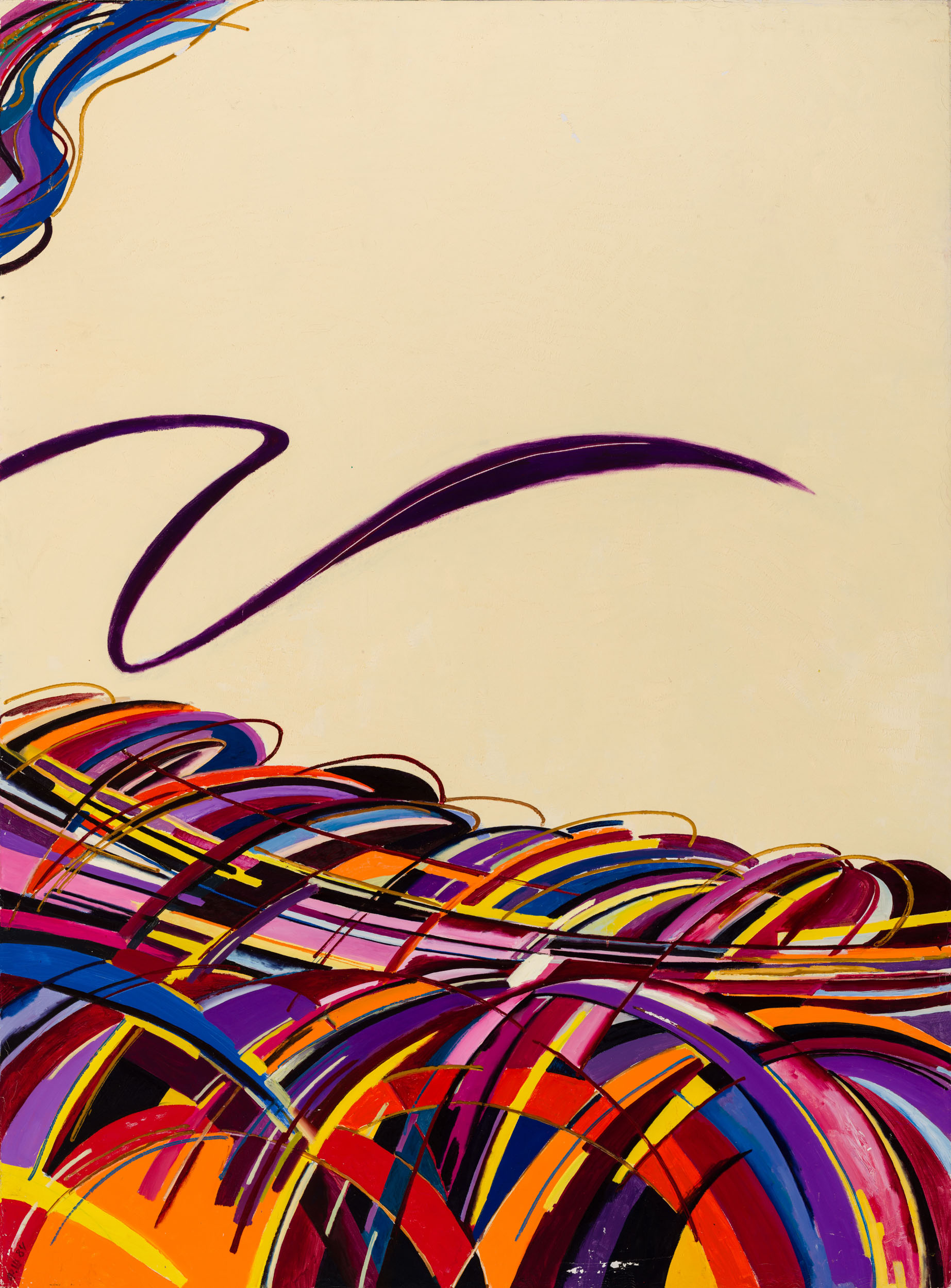
Composition from the series Tashkent, 1984. Oil on canvas, 189 × 140.7 cm (74 7/16 × 55 3/8 in.). Norton and Nancy Dodge Collection of Nonconformist Art from the Soviet Union. D04862
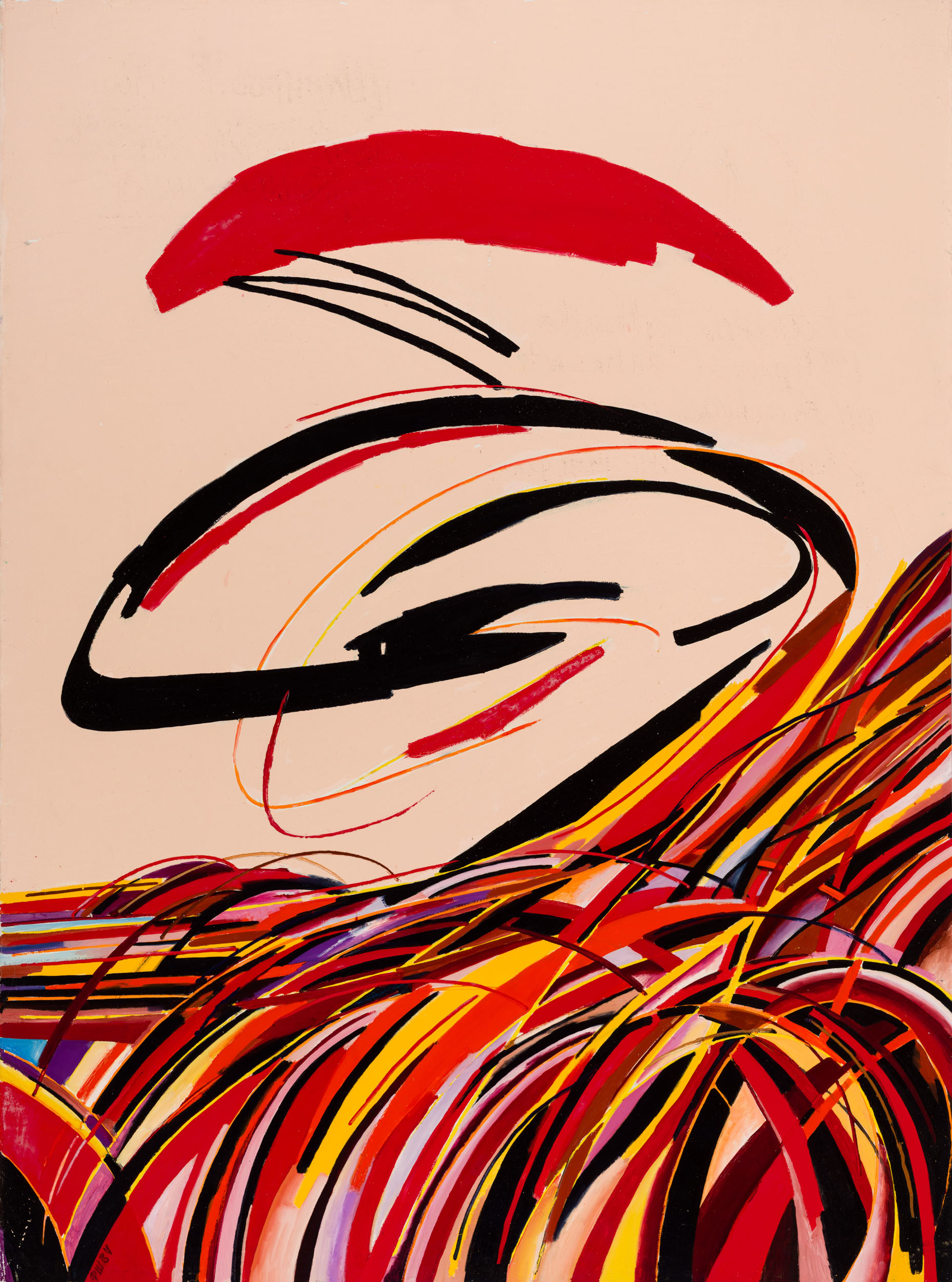
Composition 3 from the series Tashkent, 1984. Oil on canvas, 190 × 141 cm (74 13/16 × 55 1/2 in.). Norton and Nancy Dodge Collection of Nonconformist Art from the Soviet Union. D04863
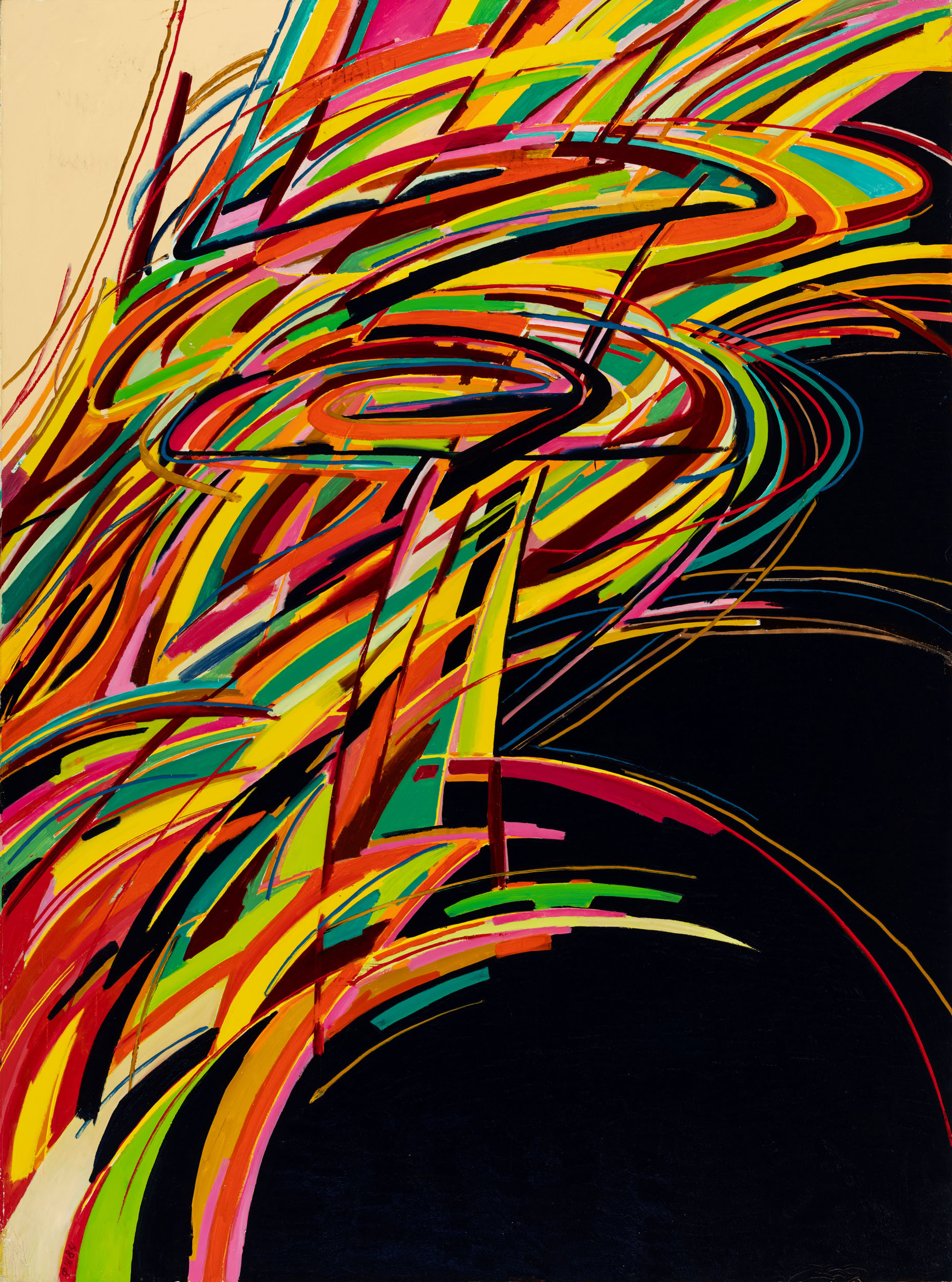
Composition 4 from the series Tashkent, 1984. Stretcher: 190 × 141 cm (74 13/16 × 55 1/2 in.). Norton and Nancy Dodge Collection of Nonconformist Art from the Soviet Union. D04861