
Guram Tsibakhashvili
1960 — Tbilisi (Georgia). Works in Tbilisi (Georgia)
Guram Tsibakhashvili has played a major role in the history of Georgian photography. In conjunction with conceptual photography, he has worked in a wide range of photographic genres, including documentary, artistic, black-and-white, color, digital, analog, street, and studio photography. He imported Western contemporary-art tendencies into a milieu saturated with Soviet documentary photography and organically incorporated them into his oeuvre.
Tsibakhashvili was born in Tbilisi in 1960. His house, which was full of interesting books, stood next to the Kukia cemetery, one of the oldest cemeteries in Georgia. His forays into photography began at the age of ten, when he was given a camera. Mysteries seem to have emerged at this time in his biography. Fascinating books and stories, the past, memory, and the camera have always played a key role in these mysteries. With his art, Tsibakhashvili is equally at home with real or fictional characters from completely different spaces and times: James Joyce’s fictional character Patrick Dignam, as seen in the artist’s photo series Ulysses; people who lived in Old Tbilisi in the early twentieth century; and the everyday inhabitants of present-day Tbilisi.
While studying chemistry at Tbilisi State University in the 1980s, Tsibakhashvili changed his professional focus, turning to photography. The Soviet regime did not see photography as an art form but as an ideological weapon for staging an invented reality. As a writer in Sovetskoe foto, the most influential photography journal at that time, stated, “the artistic values of photo-information are not of paramount importance; these values may or may not exist. The storyline of photo-information does not require an individualistic approach, a deep dissection of one’s own subjective point of view. … In some cases, an individualistic approach or an unusual angle may even belittle the documentary value.” Furthermore, the author continued: “It is not creative values that have an emotional impact, but the freshness and timeliness of socially significant information.” [1] Therefore, choosing photography as a profession at that time may have appeared as an act of either heroism or eccentricity. Yet in the late 1980s, Georgian photographers succeeded in changing society’s attitude toward their medium, and it began to play a more prominent role in Georgian artistic culture.
Since the 1980s, Tsibakhashvili has photographed Soviet symbols that were (and are) well-worn, false, and hateful to people living in Soviet or post-Soviet countries. That decade, he embarked on the ongoing black-and-white photo-series Soviet Remnants (საბჭოთა ნარჩენები), centered on Soviet symbolism. The core concept of the series is an exploration of Soviet “remnants” as expressed through ideological signs, which remained abundantly present in various visual forms throughout the 1980s and 1990s. The series incorporates Soviet emblems and motifs on building facades, in shop windows, and within different types of state institutions—Russian-language inscriptions, Lenin, the red star, bloodred flags, and the hammer and sickle—as quotations or readymades. The protagonists in the photographs are Russian inscriptions and images of Lenin—once the central icon of the Soviet system—encountered on the streets, now reduced to useless signs and symbols. The author selects appropriate visual contexts for them, exposing with striking acuity the falsity and superficiality of Soviet ideology.
In Soviet Remnants, Tsibakhashvili transforms visual images into examples of photo-conceptualism through the process of printing. For instance, in an untitled photograph of Lenin (1986, ZAM, D18854), he printed a damaged negative only partially: the upper half is obscured by a fragment of another abstract image, while a Soviet five-pointed star is drawn onto the subject’s chest. In this way, an untouchable icon of the recent past, via fragmentation and decontextualization, is transformed into a comic figure. In relation to the “Great Leader,” Tsibakhashvili, as an individual, demonstrates the same kind of negligence that the Soviet system itself exhibited toward the individual. Through the deliberate extraction of ideological images from their conventional contexts and intentional “incorrect” printing, these visual signs acquire new meanings, revealing the absurdity of dictatorial ideology. Through authorial sarcasm, the artist symbolically restores historical justice and produces a work that may be read within the framework of postcolonial art.
Another photo series, from 1992–95, is titled Autobiography Before I Was Born (ავტობიოგრაფია ჩემ დაბადებამდე ). Using contemporary photos, Tsibakhashvili recounts stories that took place in the past, prior to his birth—in this case, photography does not record the fact that “I was here” but presents an event from the past that was not experienced firsthand by the photographer.
The first solo exhibition of Tsibakhashvili’s work took place in 1985 and attracted a very large number of visitors, attesting to the growing interest in photography among the Georgian public. Also that year, the photo club Point of View (თვალსაზრისი) was established, bringing together Tsibakhashvili, Sergo Belousov, Mirain Kiladze, Yuri Mechitov, Mark Polyakov, Boris Shaverdyan, Davit Sulakvelidze, and Gogi Tsagareli. In 1987, the club mounted Georgia’s first-ever conceptual photo exhibition with the absurdist title ATATUI (an acronym for Archive of Tendentious Atavisms, Truisms, Utopias, and Intrigues); the show was held at Tbilisi’s Merani Exhibition Hall.
On the initiative of the renowned Georgian artist Karlo Kacharava, 1987 also witnessed the group exhibition of works by contemporary Georgian photographers alongside young Georgian artists from the nonconformist group Tenth Floor. For the first time ever in Soviet-era Georgia, photography was placed on par with painting and granted the status of art.
In the 1990s, Tsibakhashvili’s work began to assume a more conceptual bent, with the artist creating the most significant photo series of his career: Ulysses (ულისე, 1988–89) and The Definition (განმარტებანი, 1997–present). Based on James Joyce’s iconic novel Ulysses, the series by that name comprises seventy-five black-and-white photographs featuring sloppily handwritten texts that superimpose fragments of Joyce’s text on photographs of contemporary Tbilisi. Joyce’s original “Dear dirty Dublin” is replaced by “Dear dirty Tbilisi” of the 1990s, featuring the city’s inhabitants: artists, poets, writers, and photographers who wished to forget the hardship that prevailed in Tbilisi of the 1990s and organized numerous exhibitions, performances, actions, and events so that “reality did not destroy them.”
A series of around one hundred black-and-white photos, The Definition is a journey of sorts through the labyrinths of Tsibakhashvili’s memory and consciousness. Photographs by the artist and others, definitions from the dictionary, texts by Tsibakhashvili, and red details drawn by hand combine to create the effect of monochrome photos arrayed across a long nonstandard rectangle.
In addition to his own work, Tsibakhashvili has collaborated with magazines and newspapers. He was a photo reporter for the newspaper Seven Days (1992–96); the editor in chief of Photo Magazine (2008–9), the first photography journal in the Caucasus; and the photo editor of the fashion magazine Amarta (1999–2007). Tsibakhashvili is also involved in curatorial endeavors. He is a cofounder of the Container gallery in Tbilisi, which has hosted important exhibitions of emerging and well-known Georgian and foreign photographers.
Teaching is another important arena of activity for Tsibakhashvili. He has taught and lectured at Caucasus University, the Tbilisi State Academy of Arts, and the Tbilisi State University. He also teaches at his own photography school, Container.
Tsibakhashvili remains busy with his own photography, actively engaged on several projects including Saplings (ნერგები), Genetic Memory (გენეტიკური მეხსიერება), and Private Museum (პირადი მუზეუმი). He has participated in local and international projects and contributed to more than one hundred exhibitions, including thirty solo shows.
His works are located in various museums and private collections, including the Moscow Museum of Modern Art (MMOMA), Fotografie Forum Frankfurt, and the Zimmerli Art Museum.
Natia Tsulukidze
Translated from Georgian by Keti Mskhiladze
Notes:
1. Chudakov, G. “Fotofrafiia v presse: Soderzhanie, forma, zhanrovaya struktura” [Photography in the press: Content, form, genre structure]. In Sovetskoe foto, no. 10 (1982): 26.
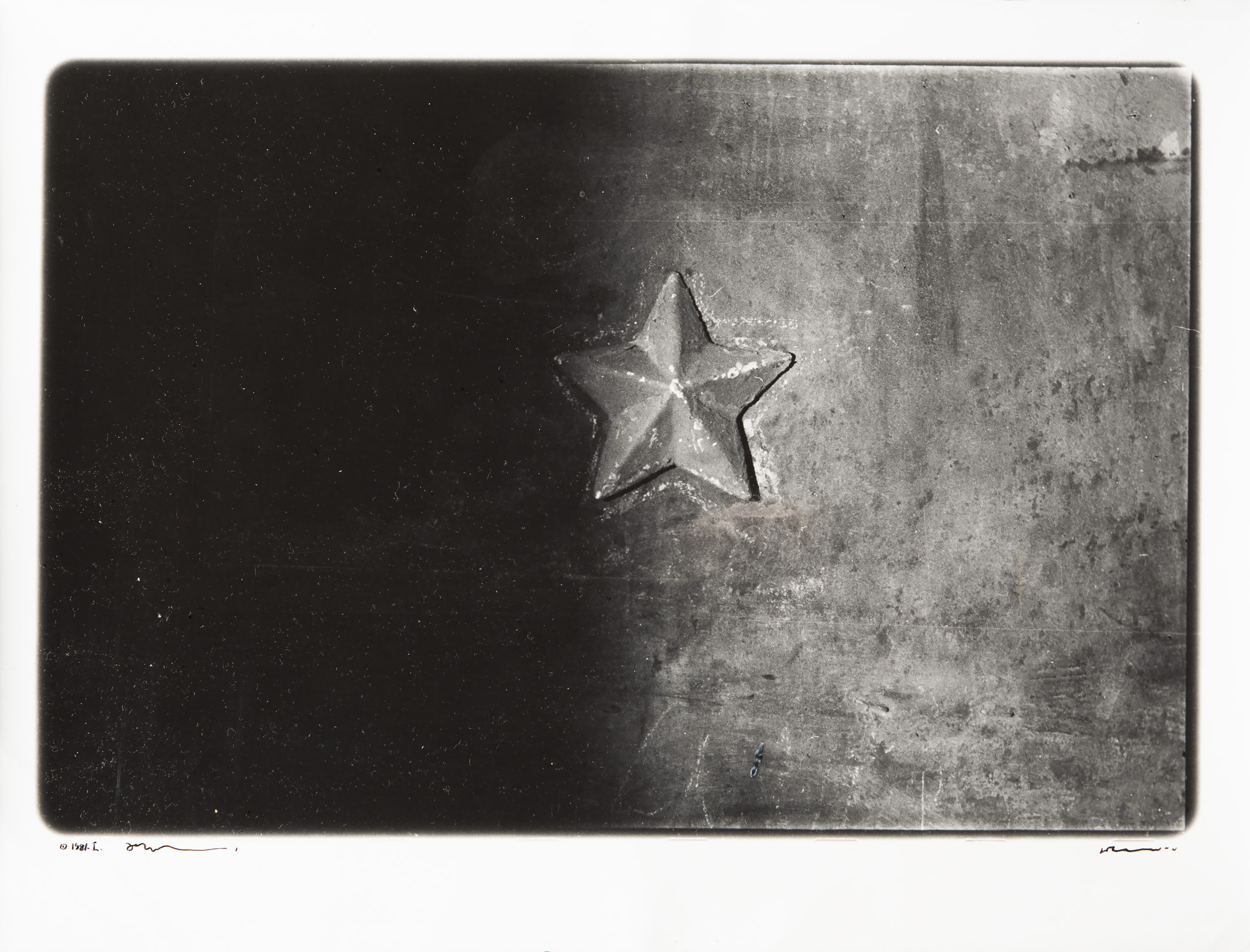
Untitled, 1981. Photograph on paper, 23.4 × 34.6 cm (9 3/16 × 13 5/8 in.). Norton and Nancy Dodge Collection of Nonconformist Art from the Soviet Union. D18853
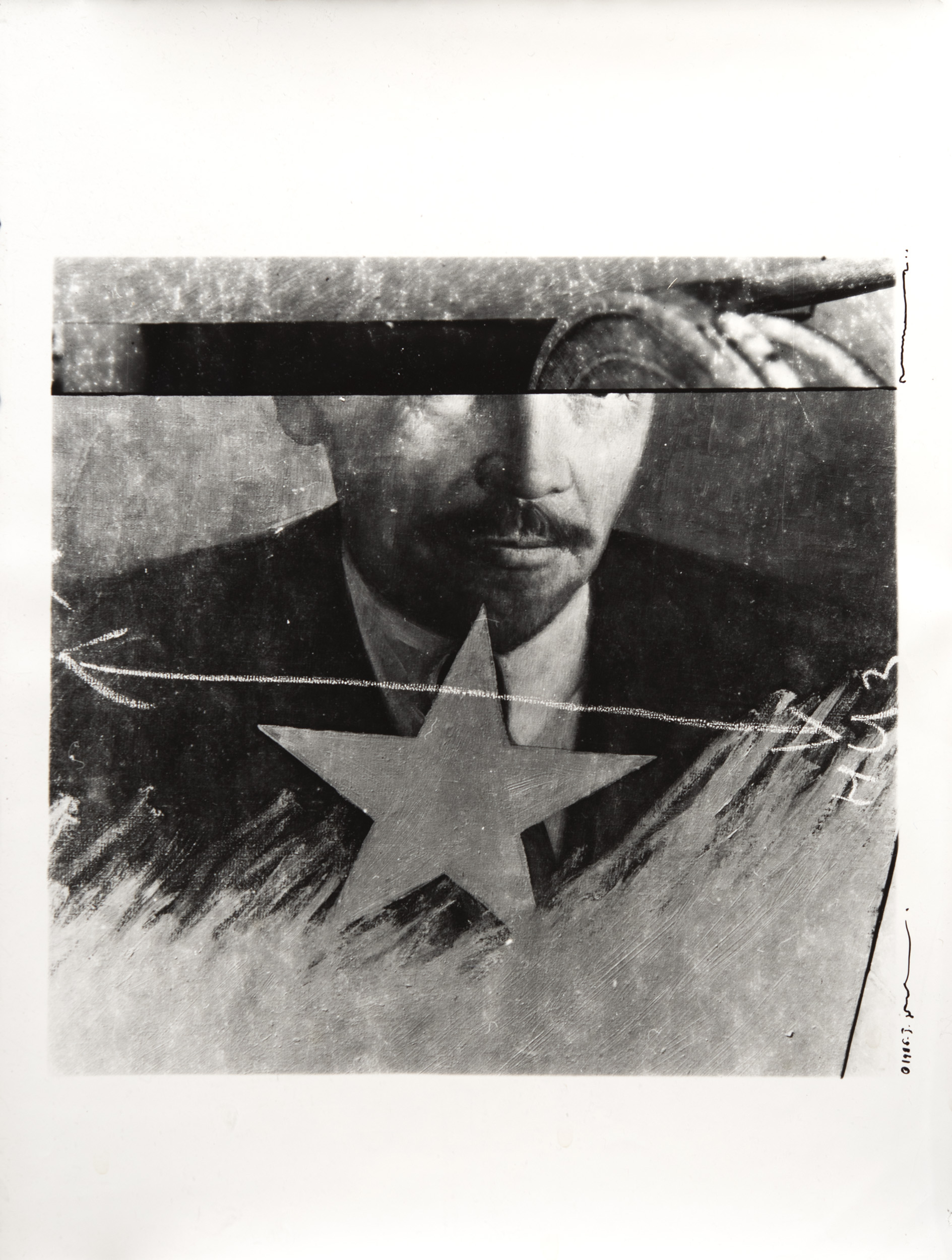
Untitled, 1986. Photograph on paper, 25 × 25 cm (9 13/16 × 9 13/16 in.). Norton and Nancy Dodge Collection of Nonconformist Art from the Soviet Union. D18854