
Maria Elkonina
1935 — Moscow (Russia) | 2018 — Moscow (Russia). Worked in Moscow (Russia)
Maria Elkonina, a prominent painter, sculptor, graphic artist, and printmaker, was a force of nature, strong and dedicated to the creation of art, particularly her distinctive wood reliefs. Her hands, skilled through years of devoted practice, shaped and transformed this material, filling it with life and meaning. Her artistic path was deeply intertwined with her family history, as she was born into a lineage of artists. Her parents, Nadezhda and Victor Elkonin (1910–1994), both contributed to the artistic landscape of Moscow, shaping Elkonina’s early exposure to the world of art. This familial influence proved to be a powerful catalyst, igniting her passion for creative expression from a young age.
Elkonina is best known for her powerful creations of assemblages, collages, and wood reliefs with dark color schemes of black and brown oil paint. The natural color and texture of wood itself play equally important roles in creating the complex space within her works. Her work investigates the intricate interrelations between abstract and human forms, creating a dialogue between the nonrepresentational and the figurative. A deep understanding and exploration of space characterize her artistic journey. The tradition of Russian icon painting held a special significance for her, not only in its use of wood but also in its emphasis on powerful shapes and a spiritual dimension. She saw herself as continuing this tradition, translating its essence into her contemporary artistic language. Composition was paramount for Elkonina. She sought a perfect balance in her works, a sense of inevitability where nothing could be added or taken away without disrupting the whole. This intrinsic warmth of wood as a material, combined with her deep understanding of spatial relationships and her commitment to handmade quality and labor-intensive artwork, fueled her creative process. Elkonina’s art is a testament to her strength, devotion, and unique ability to bridge tradition and innovation. She was a master of creating complex, multilayered spaces.
Elkonina’s artistic journey began with formal training at the Moscow Polygraphic Institute, where she studied from 1955 to 1959. This education provided her with a solid foundation in artistic techniques and principles, which she would later utilize and expand upon in her unique artistic style. Even before her formal training, she had begun working with wood in the late 1950s, a material that would become central to her artistic identity and was inspired by the traditional use of wood for icon painting. Through her father and his artist friends, she became acquainted with Paul Cézanne’s art. For Elkonina, a connection to the past was important in her creative process.
One of the defining characteristics of Elkonina’s work is her precise framing, emphasizing the strength of her spatial constructions. She masterfully interchanges objects and space, a dynamic where objects become space and space acquires tangible weight. This reflects a keen observation of natural vision, where the eye focuses on the gaps between objects, assigning them mass. Elkonina leverages this, using wood to either emphasize its thickness or dematerialize it, creating a world of subtle, living forms.
Elkonina’s Figures series of reliefs (1968, ZAM, D00074, D00073) reflect her lifelong exploration of the medium. Inspired by Russian icon painting, she introduced wooden reliefs to enhance spatial dynamics. These works showcase her mastery of object-space interplay and the dialogue between abstract and human forms. Constructed on framed, painted wooden panels, the reliefs feature multitiered, architectural structures crafted from textured wood in warm browns and ocher, with black and dark brown oil paint. Religious themes are suggested by apostle-like figures and small planks resembling books. Elkonina employs interplay between painted surfaces and relief, dark and light, and her signature palette. The central figure’s abstract head reinforces the dialogue between representation and abstraction. This interplay of positive and negative space, where objects become space, is fundamental. Framing emphasizes her vision, blending organic material with geometric form, exploring the intersection of art and religious expression.
Elkonina’s constructive approach to art led her to investigate the harmony between space and object. Her exploration of composition focused on the placement of objects on a flat surface, understanding that composition itself does not necessarily generate deep movement. She refused to see flatness as a limitation to depth, choosing instead to create depths that are clearly measurable, where space, in addition to objects, possesses perspective.
Crosses, circles, and rings recur throughout Elkonina’s art, revealing her fascination with geometric shapes and their symbolic potential. The interplay between painted and natural wood surfaces, along with varying textures, underscores her mastery of the medium. In her ongoing exploration of classical composition, the object and the space are in constant dialogue (2017.006.002, 2017.006.003). She uses oil paint to create dark color schemes of black and brown. The natural color and texture of wood, boards of different sizes, and planks play an equally important role in creating complex space. The textured, layered cross form, combined with surrounding geometric elements, demonstrates her unique approach to relief sculpture. These recurring motifs, rendered in both natural and painted wood, highlight the interplay between material and form.
Elkonina’s exploration of form, material, and spacing remains a central and timeless concern for any artist. Her art can be considered a continuation of the principles of space structures, a concept that transcends time and artistic trends. This commitment to fundamental artistic principles makes her work both traditional and enduring. Her compositional explorations were essential to deepening her understanding of the world and formulating spiritual expressions in a contemporary context.
This interconnected vision of constructive and compositional aspects opened up a vast realm of artistic exploration for Elkonina. Her works reveal a tense force field between object and space, a crucial element in the formation of an original worldview. This deep stretching of space naturally alters emotional accents, presenting the world in a dramatic light. At times, space exerts such a powerful influence on the object that the object’s volume diminishes. To emphasize this subject-space synthesis, Elkonina skillfully manipulates the surface of her counter-reliefs. Her long-term preference for wood alludes to her belief that this material allows her to convey deeper emotional tensions. She maximizes the use of the wood’s surface, sometimes leaving portions uncovered by paint, revealing its natural texture. When creating counter-reliefs on wood, Elkonina faces the complex artistic challenge of balancing the importance of added volume against the surrounding space. The energy she generates is objective, as she transforms the space synthesis into the actions of the counter-relief elements, making them integral to this synthesis. Elkonina explored light relief, a technique that further accentuated her signature style. The raised elements of her reliefs transform into depth, while the spaces between them acquire a sense of heaviness and thickness. This masterful manipulation of positive and negative space exemplifies the principles of artistic counter-relief, where the seemingly frontal elements recede into the depth and the physical depth becomes the primary image.
These principles of space and form are further explored in her later works, for example, Figure with a Circle and a Cross (1996, Kolodzei Art Foundation, Highland Park, NJ). This later work by Elkonina explores a shift toward abstraction and simplification in her artistic language. While rooted in her earlier explorations of wood relief, it demonstrates a refined focus on form, space, and material, all contained within a distinct circular format. The natural wood grain is visible, adding an organic element to the composition, while the constructed elements create a contrasting sense of geometric order. The composition centers on a vertical rectangle within this circle, containing layered wooden components, highlighting the texture and inherent qualities of the wood. Rough edges contrast with smoother, painted surfaces, emphasizing materiality. Spatial ambiguity persists, with the layered wood suggesting receding depth against the surrounding painted areas, particularly the dark, arched background within the circle. Light and shadow play a more prominent role, enhancing the three-dimensional quality of the relief. The restrained color palette, dominated by black and muted tones, emphasizes this interplay. The simplified geometric forms and central placement of the layered rectangle suggest a symbolic meaning, potentially representing an architectural fragment, a gateway, or an abstract concept. The circular shape of the artwork itself acts as a frame, further focusing the viewer’s attention on the central composition and adding a sense of wholeness and containment. Elkonina’s signature manipulation of space and her focus on the interplay between object and void remain, but are expressed with greater economy and abstraction within the defined boundary of the circle. This work reflects a mature artistic vision, distilling her core concerns into a powerful and evocative composition.
Elkonina has been a member of the Union of Artists of the USSR since 1960. Since 1957, she has participated in numerous exhibitions in Russia and, after 1959, abroad, including over ten solo exhibitions. These range from Maria Elkonina, Exhibition Hall of the Union of Soviet Artists, Moscow (1980) and Maria Elkonina, Central House of Artists, Moscow (1991), to the retrospective exhibition Maria Elkonina. Objects. 1957–2007 at the Tretyakov Gallery in Moscow (2007). Elkonina’s works are held in many public collections, including the Ludwig Museum, Cologne; State Tretyakov Gallery, Moscow; State Russian Museum, Saint Petersburg; Moscow Museum of Contemporary Art, Moscow; Musée d’Art Contemporaine de la Ville de Paris, Paris; Zimmerli Art Museum, New Brunswick; and the Kolodzei Art Foundation, Highland Park.
Natalia Kolodzei
Photo portrait by Lev Melikhov. D15147
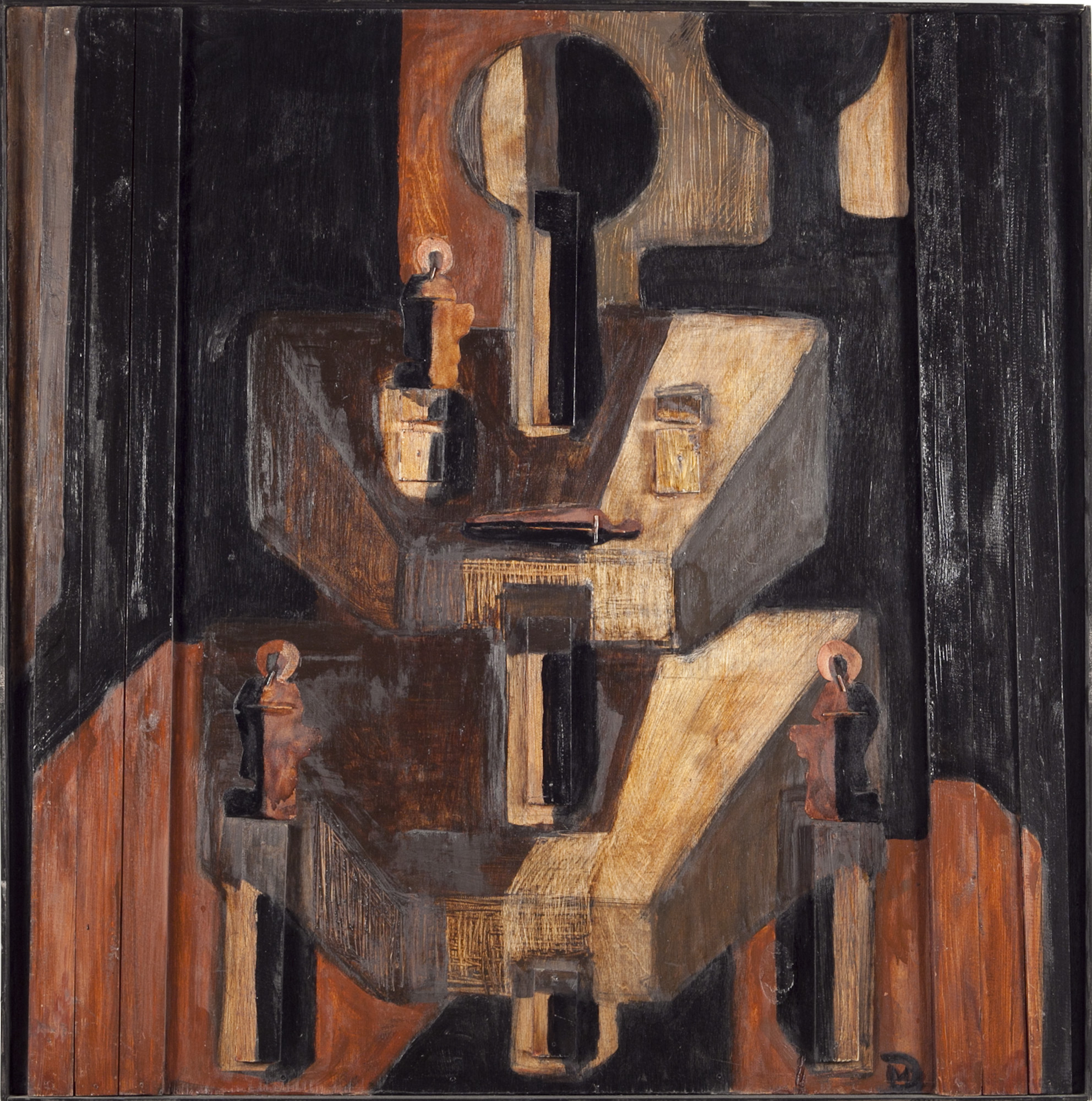
Composition on a Religious Subject, I, 1968. Oil and wood on fiberboard, 101.5 × 101 cm (39 15/16 × 39 3/4 in.). Norton and Nancy Dodge Collection of Nonconformist Art from the Soviet Union. D00074
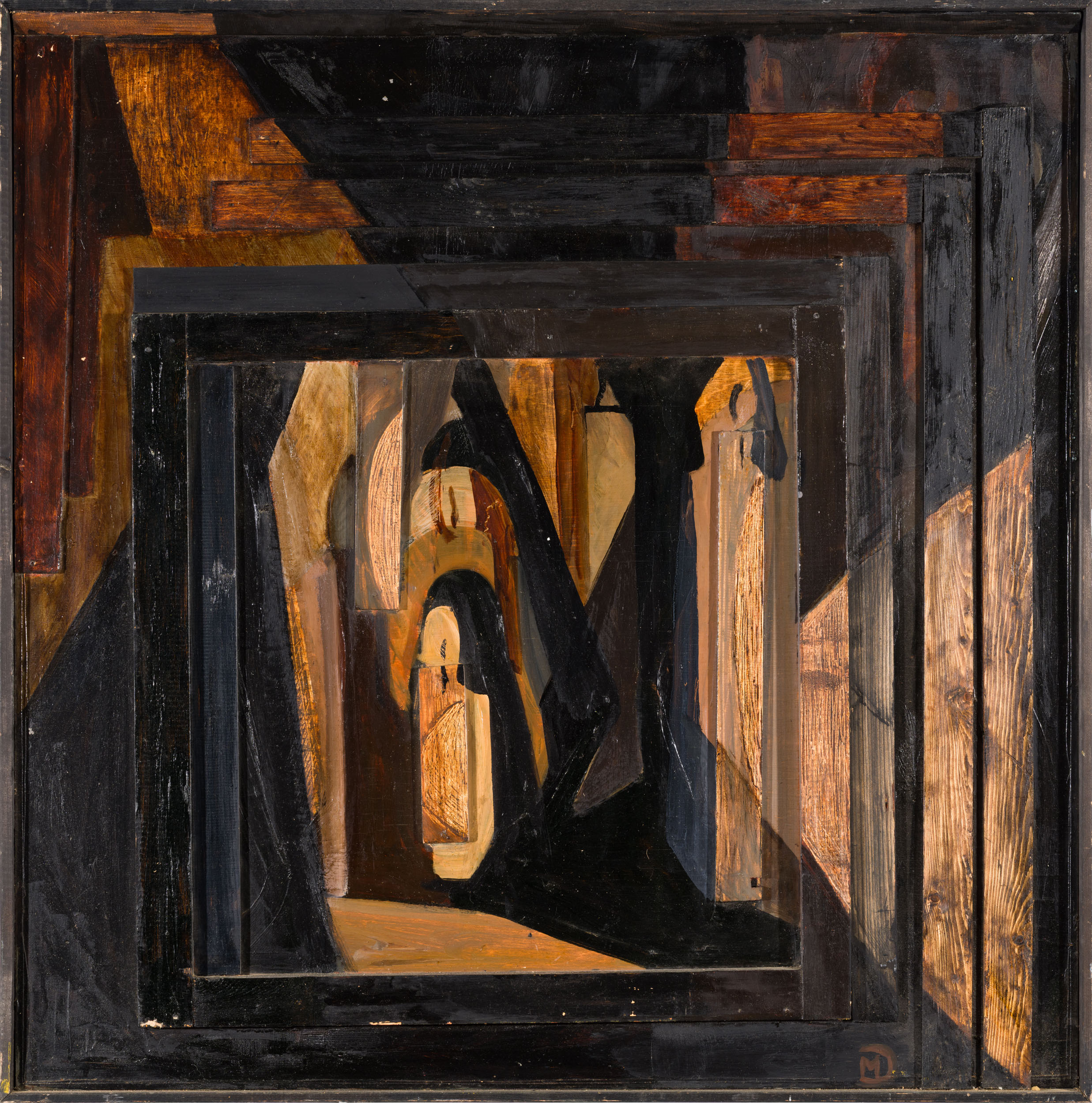
Candles, 1969. Oil on wood, 91 x 91 x 6 cm (35 13/16 x 35 13/16 x 2 3/8 in.). Norton and Nancy Dodge Collection of Nonconformist Art from the Soviet Union. D06226
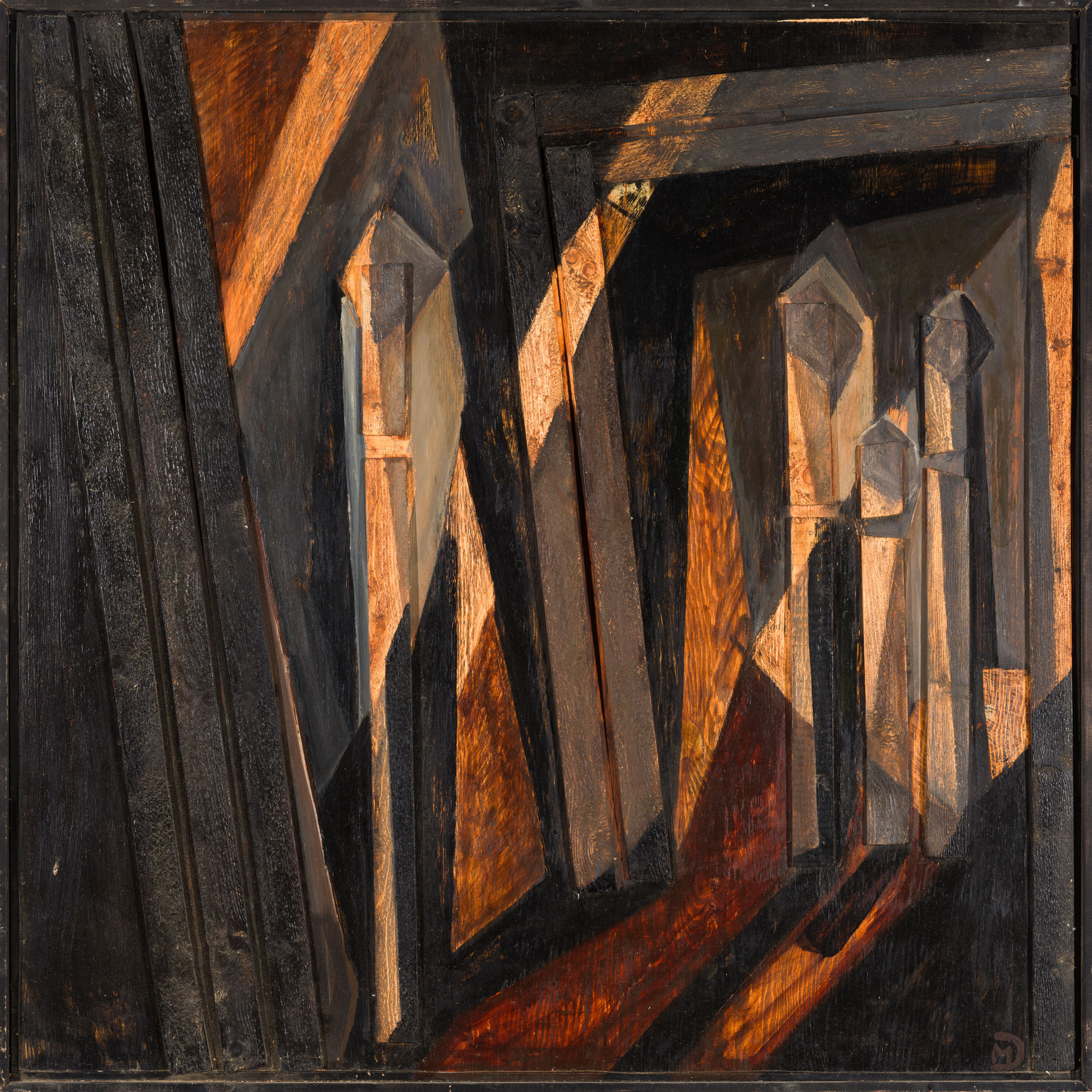
Interior with Lights, 1969. Painted wood on panel, 100 x 100.5 cm (39 3/8 x 39 9/16 in.). Norton and Nancy Dodge Collection of Nonconformist Art from the Soviet Union. D06227
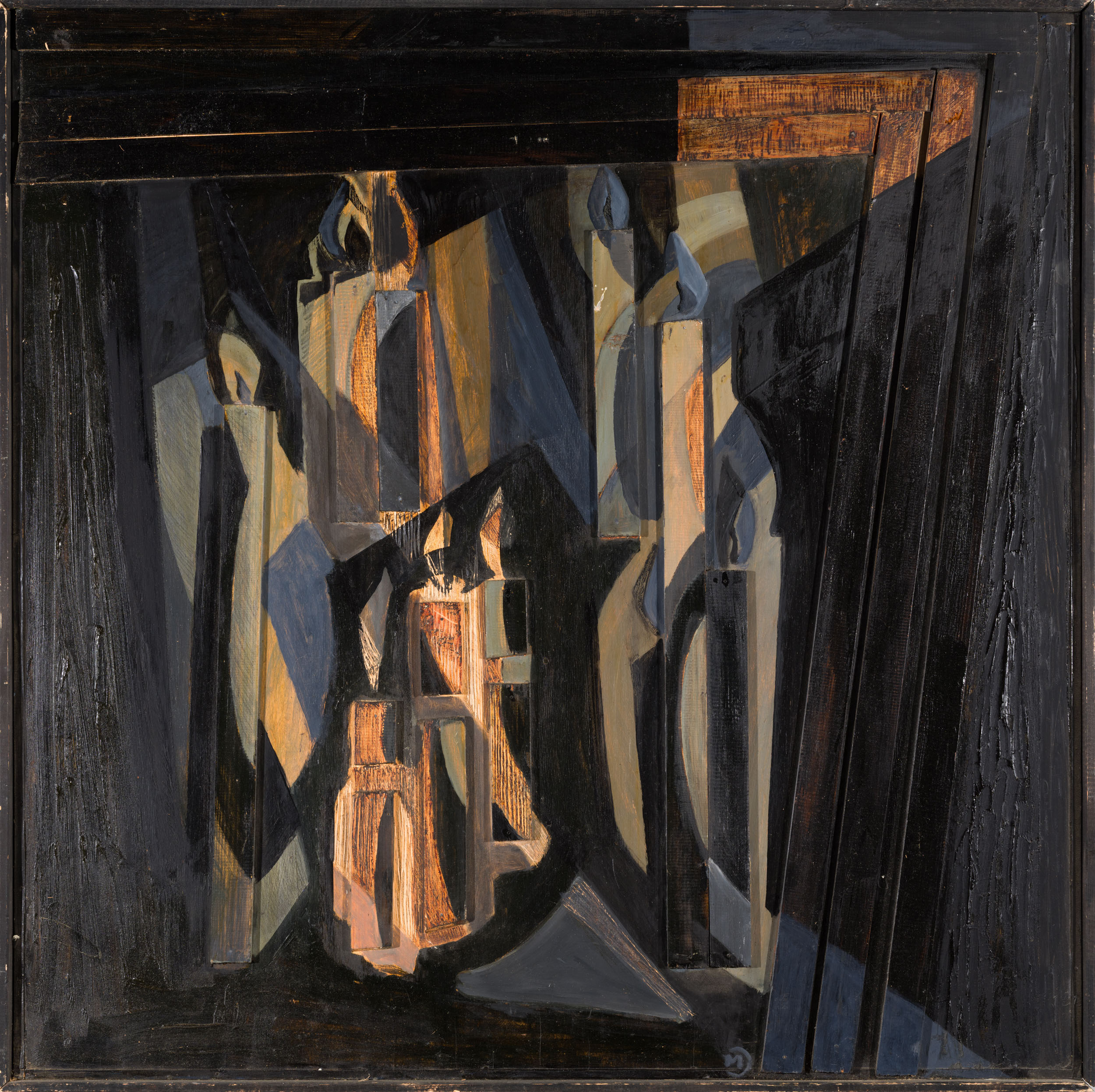
Hot Lights, 1970. Painted wood on panel, 102.5 x 102.5 x 5.5 cm (40 3/8 x 40 3/8 x 2 3/16 in.). Norton and Nancy Dodge Collection of Nonconformist Art from the Soviet Union. D06228