
Robert Elibekian
1941 — Tbilisi (Georgia). Works in Yerevan (Armenia)
Robert Elibekian—painter, graphic artist, and set designer—has already become a classic of Armenian national modernism of the second half of the twentieth century. His sui generis painting style is unique not only in Armenian but world painting as a whole. The artist’s contribution to modern Armenian set design is also considerable.
Elibekian was born in Tbilisi to an artistic family: son of the primitivist artist Vagarshak Elibekian, noted for his work in the theater, and brother of the artist Henry Elibekian. In 1960, the future painter moved to Yerevan, and in 1965, he graduated from the Yerevan State Institute of Fine Art and Theater (now the State Academy of Fine Arts). In 1970, Elibekian joined the Artists’ Union of Armenia.
From 1965 on, he was widely exhibited both in the USSR and abroad, and immediately achieved international recognition. The geographic scope of Elibekian’s group and solo exhibitions is vast: Argentina, Belgium, Bulgaria, Canada, France, Hungary, Italy, Lebanon, Luxembourg, the Netherlands, Poland, Portugal, Spain, the UK, and the US. Among the first and most significant of these exhibitions, held in 1968, paired the artist with Seiran Khatlamadjian, one of the first lyrical abstractionists of the Soviet era. Presented at the Armenian Architects’ Union in Yerevan, this showing became one of those milestones demarcating a clear boundary between official and modernist art.
As a devotee of “pure art” and an exceptional conjurer of color, Elibekian brought to modern Armenian painting a worldly, courtly, opulent elegance. While early on in his artistic journey, in the 1960s, his palette was dominated by dark, olive-ocher, brown tones, by the 1970s it had become much lighter and filled with a polyphony of vivid, saturated hues, as the surfaces of his paintings and the forms depicted therein seemed to melt and merge.
The theatricalized urban culture of Tbilisi—once known as the “Paris of the Caucasus”—the backstage world of the theater, and the painting of the Tbilisi school of painting (above all, the work of Alexander Bazhbeuk-Melikyan) became Elibekian’s points of departure. The impressions left on him by the archetypes around him, as dreams of the past, were resurrected and reconfigured in the artist’s imagination, synthesized with reminiscences of Armenian Cilician miniatures, church architecture, and frescoes, as well as the aesthetics of the Renaissance, baroque, rococo, art nouveau, and symbolism.
Elibekian’s painting, which took shape in the context of the “decadent art” of the Soviet era of stagnation (the late 1960s to the 1980s), embodied a new wave of rejection of socialist culture on the part of 1970s artists. The escapism of Elibekian and the other artists of his generation—the flight from reality; the immersion in the realms of dreams, visions, and magic; and the free creation of forms—constituted an oblique way of opposing the totalitarian system. Imagined and hermetic, Elibekian’s art sets forth a parallel reality, an allegorical and transcendent world “behind the looking glass” populated by actors and actresses, mummers, musicians, and acrobats in fanciful outfits and fairy-tale hats. Comedians (1974, ZAM, D05518) and Three Wearing Hats (1978, ZAM, D05493), from the Norton and Nancy Dodge Collection, are two vivid examples.
Elibekian’s oeuvre also includes numerous still lifes and portraits—but he considerably expanded these genres and transfigured his models. Girl with Fruits (1976-77, ZAM, D05222), also in the Dodge Collection, is a fascinating example of such genre-mixing.
But it is the theatrical theme that remains front and center in Elibekian’s art, which undoubtedly derives from his childhood memories of the Tbilisi theater thanks to his father’s involvement. Consisting of several intersecting planes, with arches and niches, Elibekian’s theatrical compositions suggest the space of a stage, while simultaneously evoking the form of a church altar. This compositional union of stage and altar reveals the main spiritual message of Elibekian’s work: catharsis through art.
Scenes of actresses’ dressing rooms with mirror images also figure largely in his oeuvre and are well represented in the Dodge holdings: Comedians (1974, ZAM, D05518); In Front of the Mirror (1980, D07190; 1981, D07216); Untitled, from the series Woman Across from the Mirror (1981, ZAM, D05814).
Elibekian’s ambiguous mirror allusions transport us from the prosaic and the everyday. The notion of the mirror as metaphor for the problematic relationship between reality and its reflection has fascinated humanity since antiquity, from the philosophy of Plato and Aristotle (the eidos as the original, and mimesis as its imitation-reflection), to the contemporary theory of the simulacrum (Jean Baudrillard, Walter Benjamin, Gilles Deleuze), and perhaps even to the behind-the-looking-glass phantasmagoria of Lewis Carroll. As an allegory that touches on these cultural-philosophical and aesthetic undercurrents of reflection, Elibekian’s work explores a crucial leitmotif of twentieth-century culture: the fluid, uncertain, and imperfect nature of reality and the loss of faith in its representation.
Since the 1980s, Elibekian’s painting and graphic art has intensified in its dramatic quality and mystical aura. The once-calm fluidity of the earlier canvases has given way to sharp geometric forms and restless, dynamic compositions. The theme of the Crucifixion, which has preoccupied the artist since the 1970s, begins to resonate with heightened urgency, as seen in Untitled (1980, ZAM, D06987), Crucifix (1985, ZAM, D06956), and Untitled (1986, ZAM, D09229), from the Dodge Collection.
Elibekian’s works may be found in the National Gallery of Armenia in Yerevan; the Modern Art Museum of Yerevan, Armenia; the Tretyakov Gallery and the Museum of Oriental Arts in Moscow, Russia; the Alex and Marie Manoogian Museum in Paris, France; the Presidential Residence and Government Office of Armenia; the White House in Washington, DC, USA; the Zimmerli Art Museum in New Brunswick, NJ, USA; the Matenadaran in Yerevan, Armenia; the Sergei Parajanov Museum in Yerevan, Armenia; and the Etchmiadzin Cathedral Museum, Etchmiadzin, Armenia.
Elibekian’s awards and honors include the Saint Mesrop Mashtots medal from the Matenadaran (2011), People’s Artist of the Republic of Armenia (2008), the Laureate of the Presidential Award of the Republic of Armenia (2004), the Artavazd Award of the Theater Association of Armenia in the Best Stage Designer of the Year category (2005), the Movses Khorenatsi (Moses of Khoren) medal for Significant Achievements in National Art (2001), and the Laureate of the State Prize of Soviet Armenia (1981).
Lilit Sargsyan
Translated by Ilya Bernstein
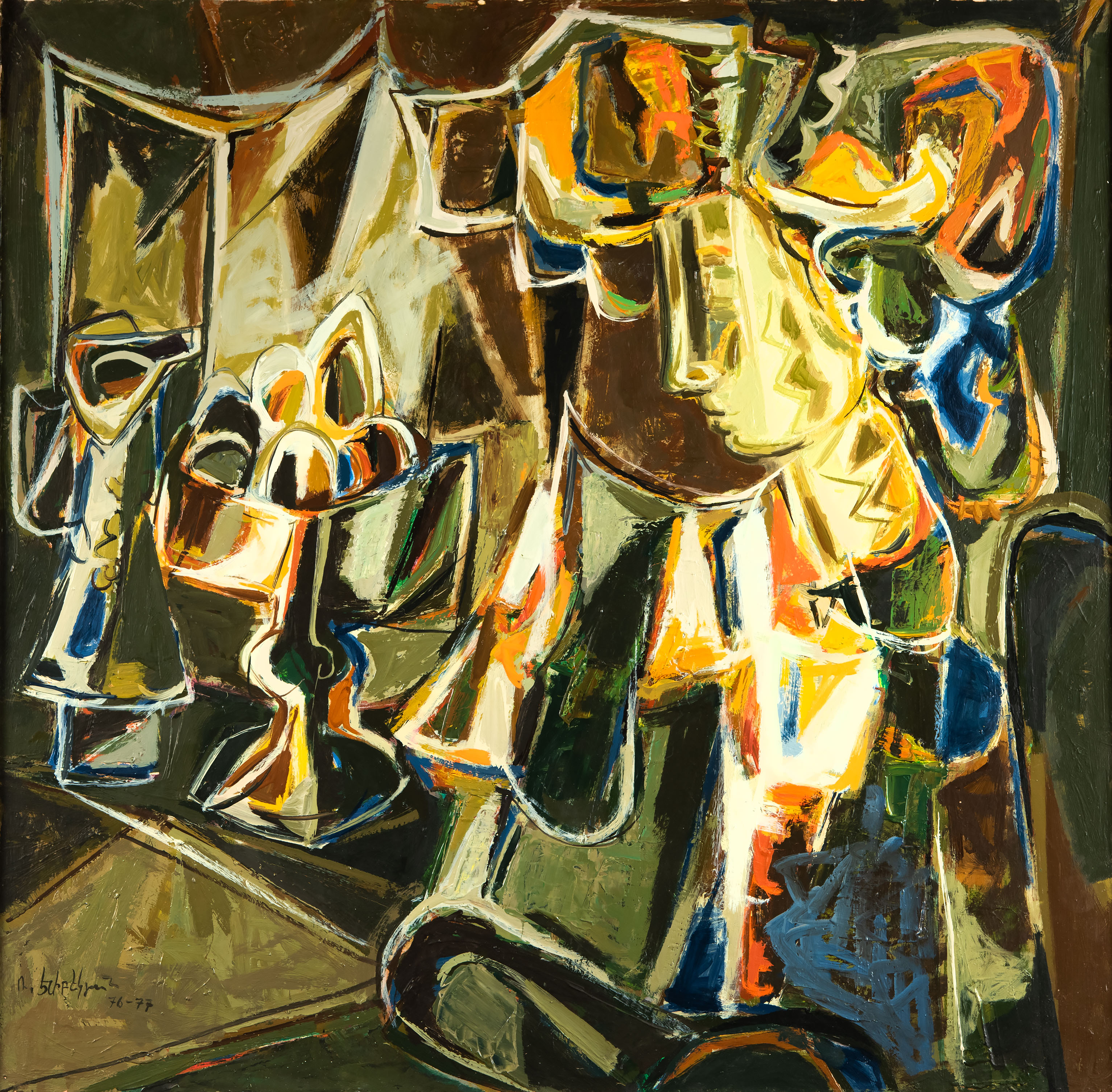
Girl with Fruits, 1976–77. Oil on canvas, 80.5 × 81 cm (31 11/16 × 31 7/8 in.). Norton and Nancy Dodge Collection of Nonconformist Art from the Soviet Union. D05222
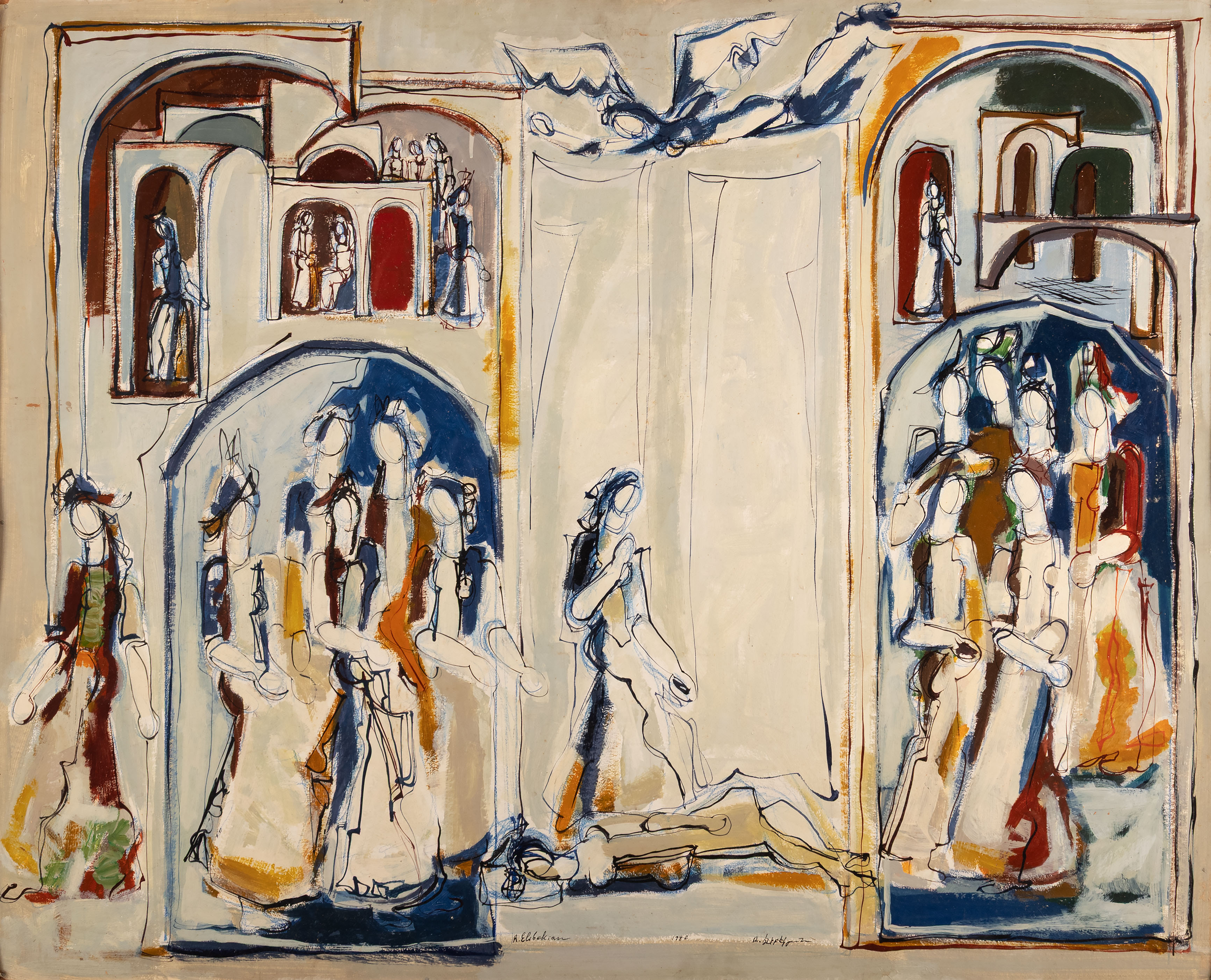
Performance, 1976. Tempera on fiberboard, 81.5 × 100.3 cm (32 1/16 × 39 1/2 in.). Norton and Nancy Dodge Collection of Nonconformist Art from the Soviet Union. D05460
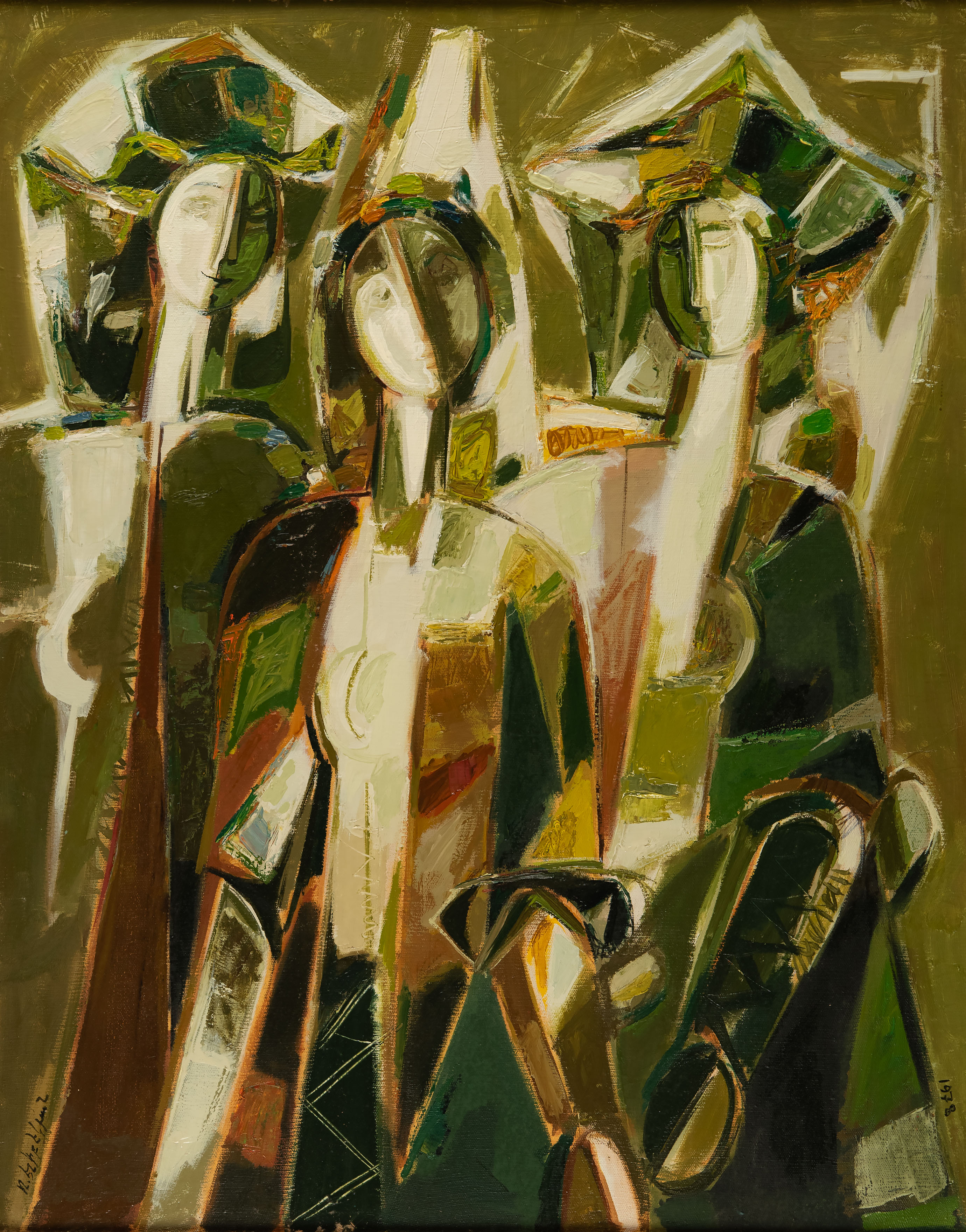
Three Wearing Hats, 1978. Oil on canvas, 93 × 73.3 cm (36 5/8 × 28 7/8 in.). Norton and Nancy Dodge Collection of Nonconformist Art from the Soviet Union. D05493
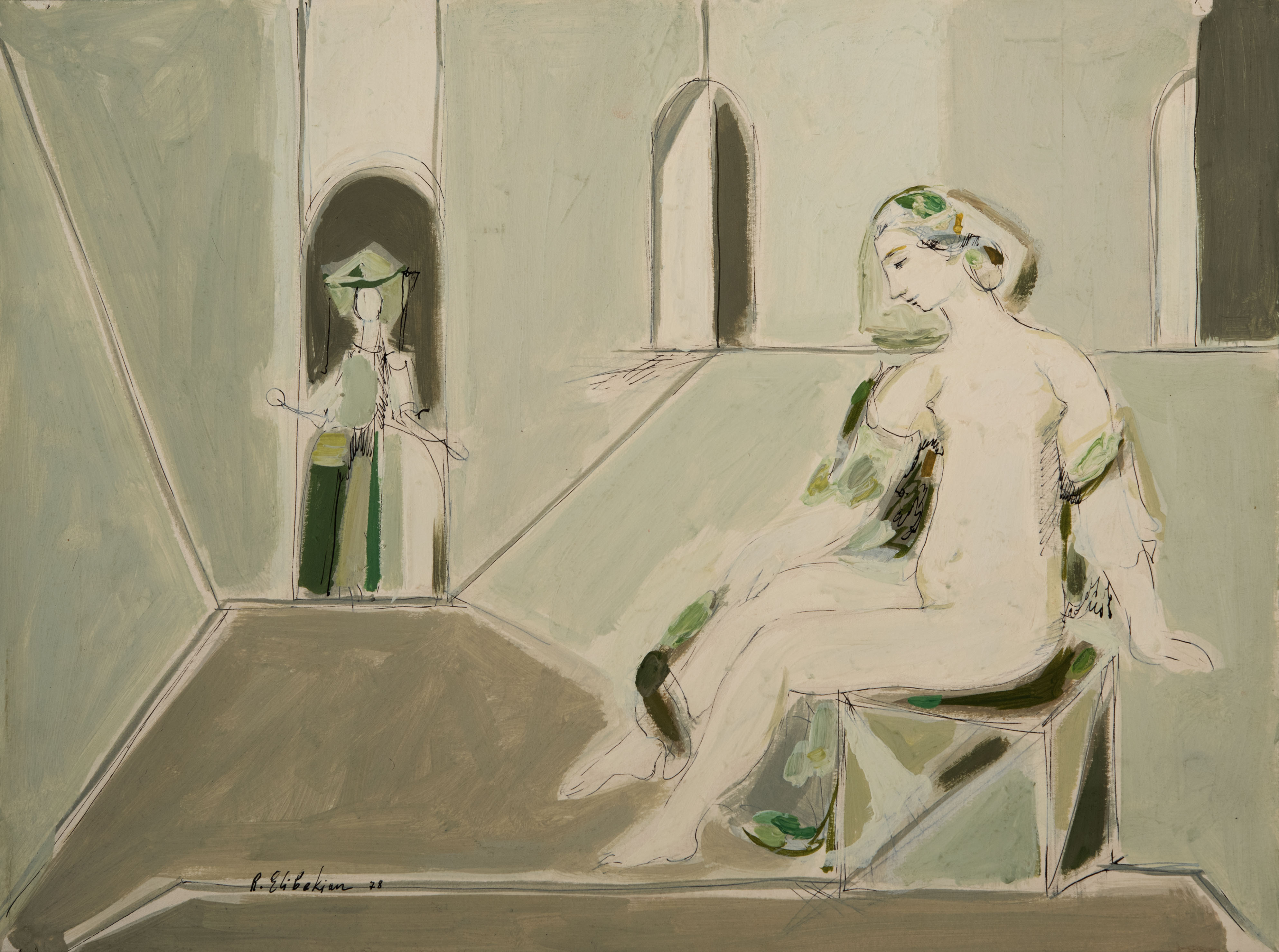
Untitled, 1978. Gouache and ink on paper, 36 × 48 cm (14 3/16 × 18 7/8 in.). Norton and Nancy Dodge Collection of Nonconformist Art from the Soviet Union. D06884
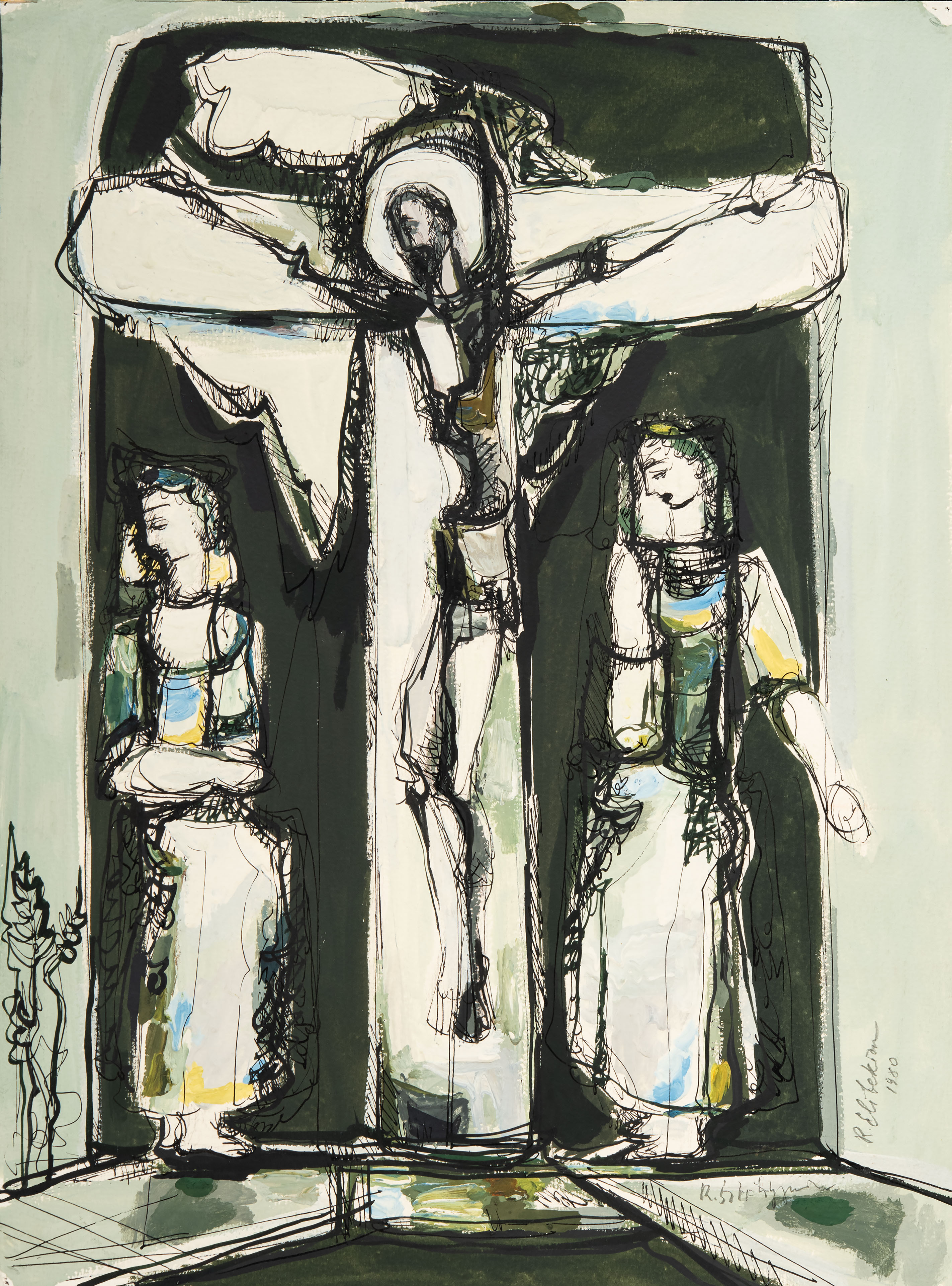
Untitled, 1980. Gouache and ink on paper, 47.8 × 35.8 cm (18 13/16 × 14 1/8 in.). Norton and Nancy Dodge Collection of Nonconformist Art from the Soviet Union. D06987
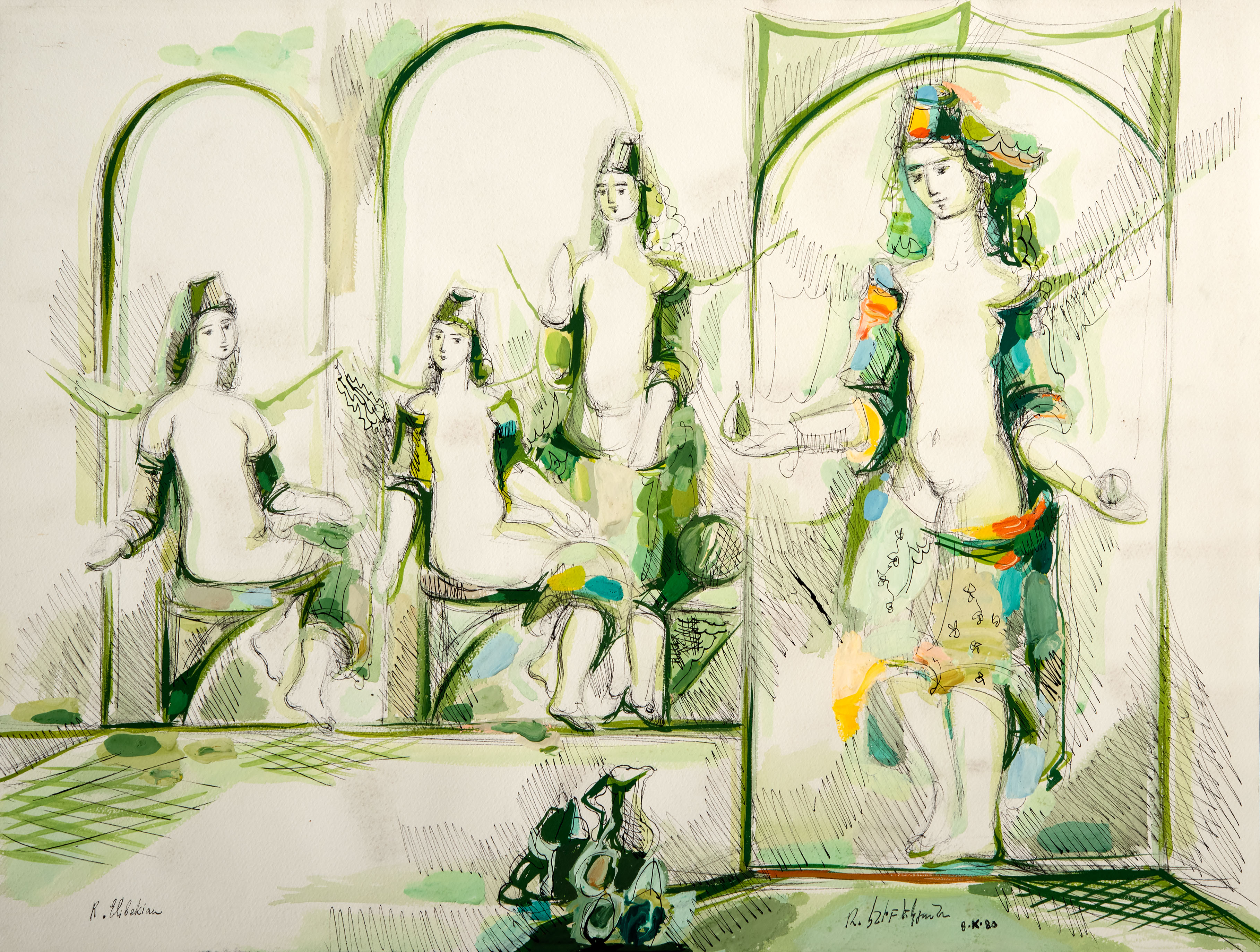
In Front of the Mirror, 1980. Gouache and ink on paper, 49.1 × 64.3 cm (19 5/16 × 25 5/16 in.). Norton and Nancy Dodge Collection of Nonconformist Art from the Soviet Union. D07190
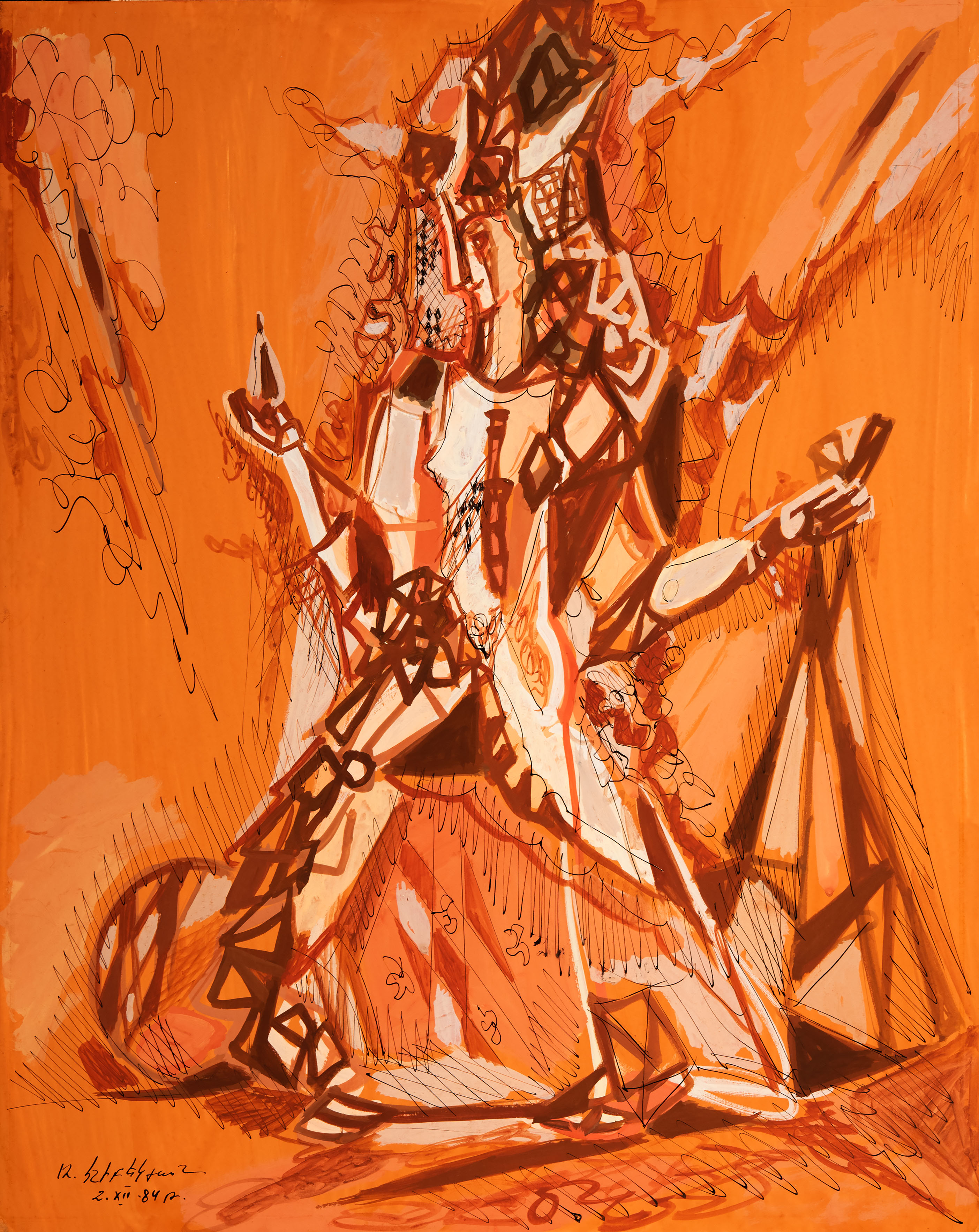
Untitled, 1984. Gouache, 49.5 × 39.5 cm (19 1/2 × 15 9/16 in.). Norton and Nancy Dodge Collection of Nonconformist Art from the Soviet Union. D07226
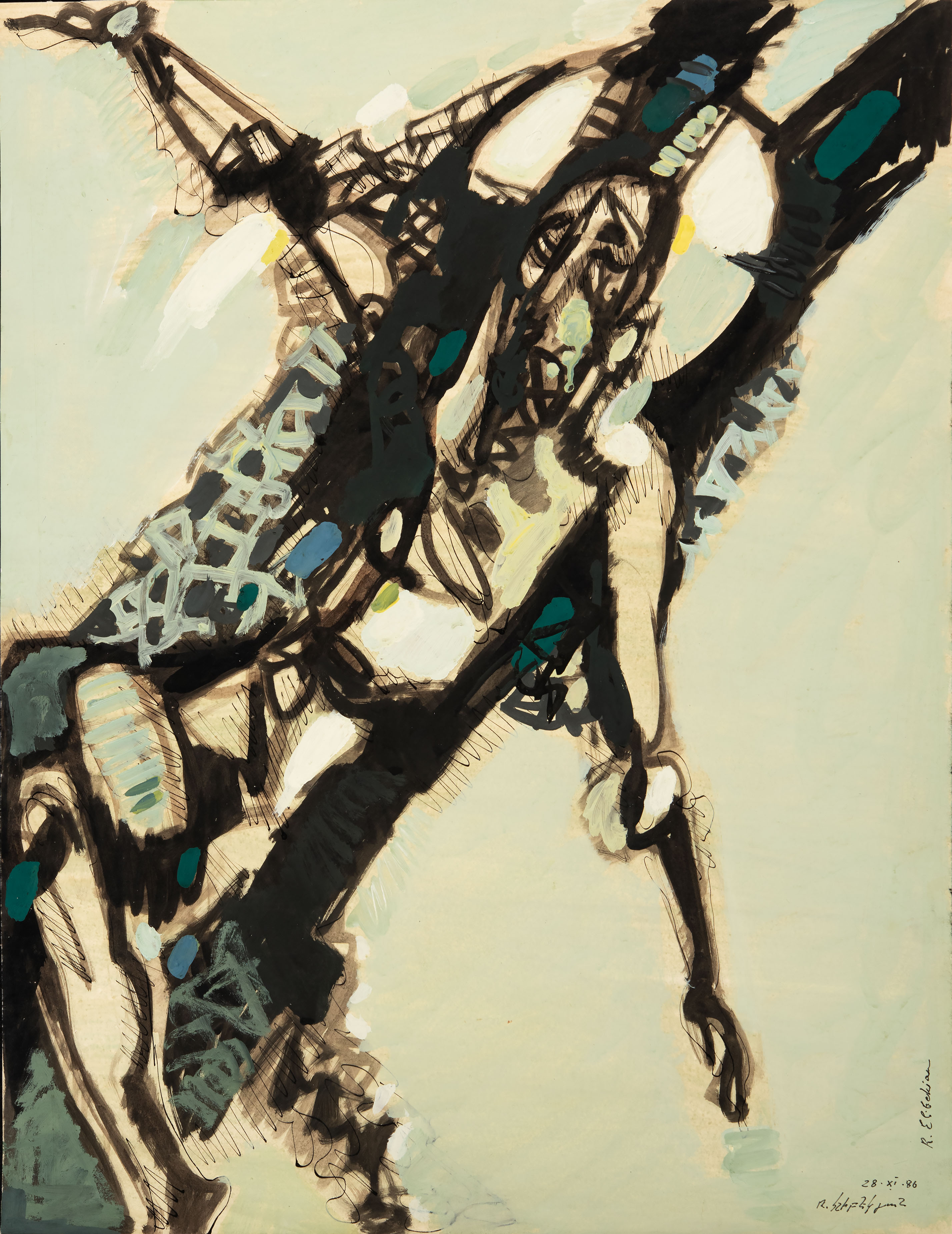
Untitled, 1986. Gouache, watercolor, pen, and ink on paper, 64.8 × 50 cm (25 1/2 × 19 11/16 in.). Norton and Nancy Dodge Collection of Nonconformist Art from the Soviet Union. D09229