
The Sum is Greater than the Parts: Collage and Assemblage
The exhibition explores the use of collage and assemblage among nonconformist artists of the former Soviet Union and is drawn entirely from the Norton and Nancy Dodge Collection of Nonconformist Art.
Collage involves the pasting of various materials on a flat surface, a technique pioneered by Cubism. On one level, the introduction of collage elements to their analytical cubist works allowed artists to explore various color and textural elements. On another level, and perhaps more important for the revolutionary quality of collage, the inclusion of prefabricated elements into works of art raises questions about the nature of reality and the possibility of new realities as created by the artist.
Many avant-garde artists, among them Russian constructivists and members of numerous dada movements, also turned to the photographic equivalent of collage, photomontage. As an artistic device, photomontage combines the pictorial techniques of collage and the realism of photography. The avant-garde valued the realistic quality associated with photography and photomontage as a means of reintroducing reality to their experiments with abstraction.
Assemblage, the three-dimensional equivalent of collage, also can be traced back to early twentieth-century modernism, such as Picasso's three-dimensional work and Marcel Duchamp's (1887–1968) ready-mades; the term assemblage, however, was first introduced by Jean Dubuffet (1901–1985). The constituent elements of assemblages are materials, often manufactured, not intended for art.
The concept of creating new realities through the juxtaposition of materials underlies the nonconformist collages and assemblages included in the exhibition. While these artists' works vary greatly in style, the theme of reacting against Soviet life underlies all of their work.
Curated by Alla Rosenfeld and Jeffrey Wechsler.
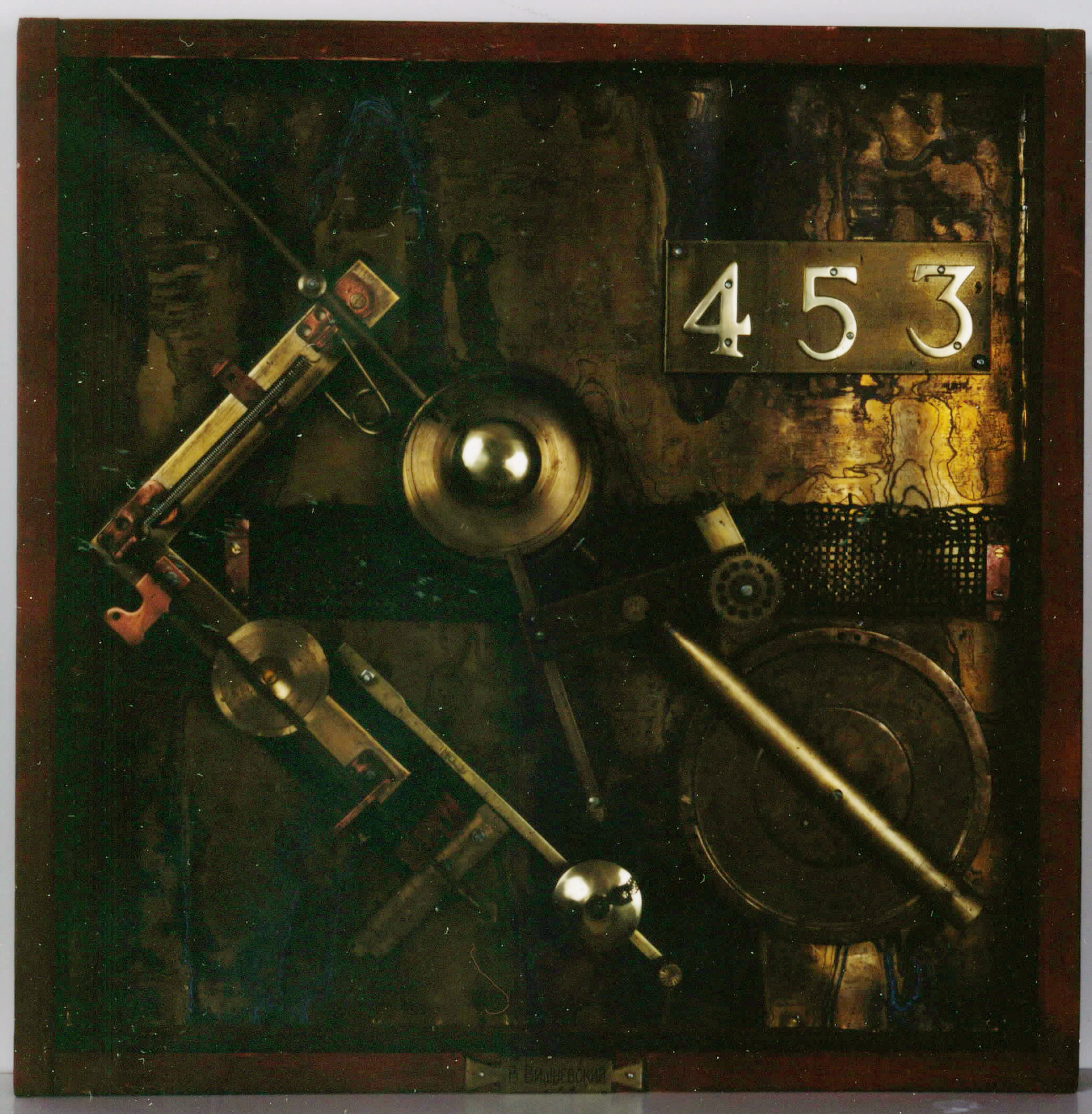
Vladimir Vishnevsky, Home, 1982. Assemblage (metallic industrial components, metallic mesh, metallic numerals, and wood on sheet metal mounted on wood), 58 x 58 x 10 cm (22 13/16 x 22 13/16 x 3 15/16 in.). Purchased with funds donated by Norton Dodge and Nancy Dodge. 1998.1362
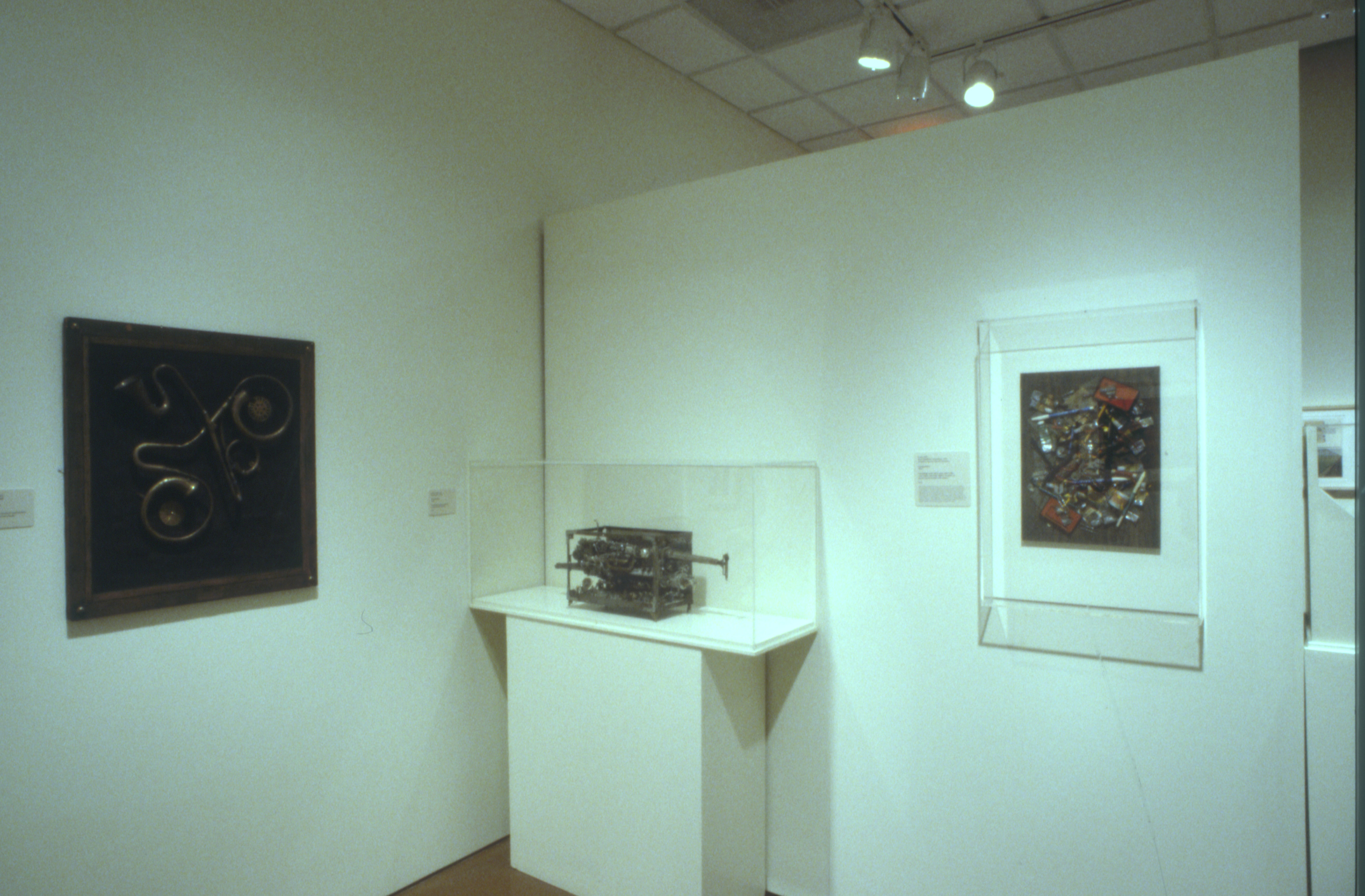
Installation photo featuring artworks from the exhibition The Sum is Greater than the Parts
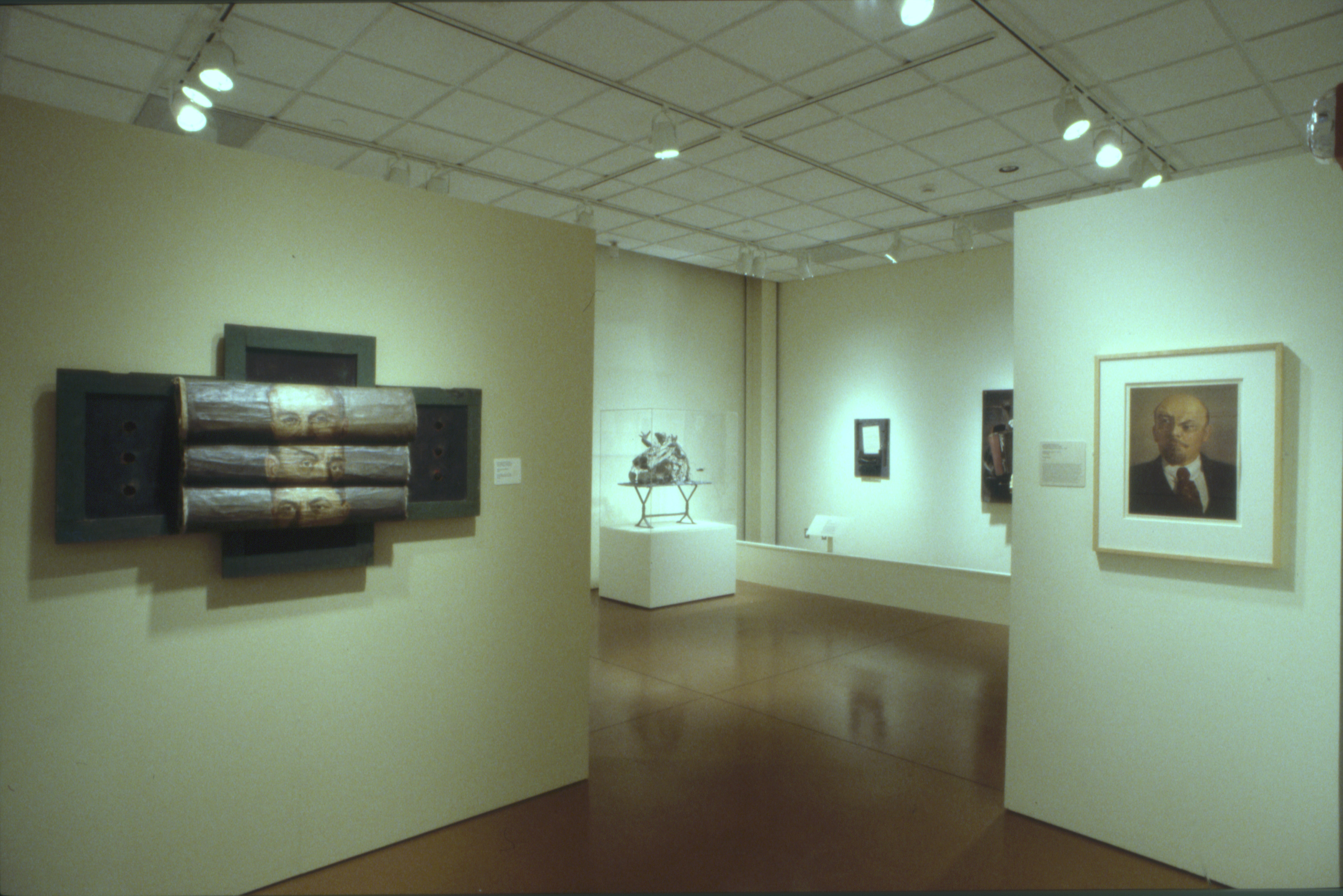
Installation photo featuring artworks from the exhibition The Sum is Greater than the Parts
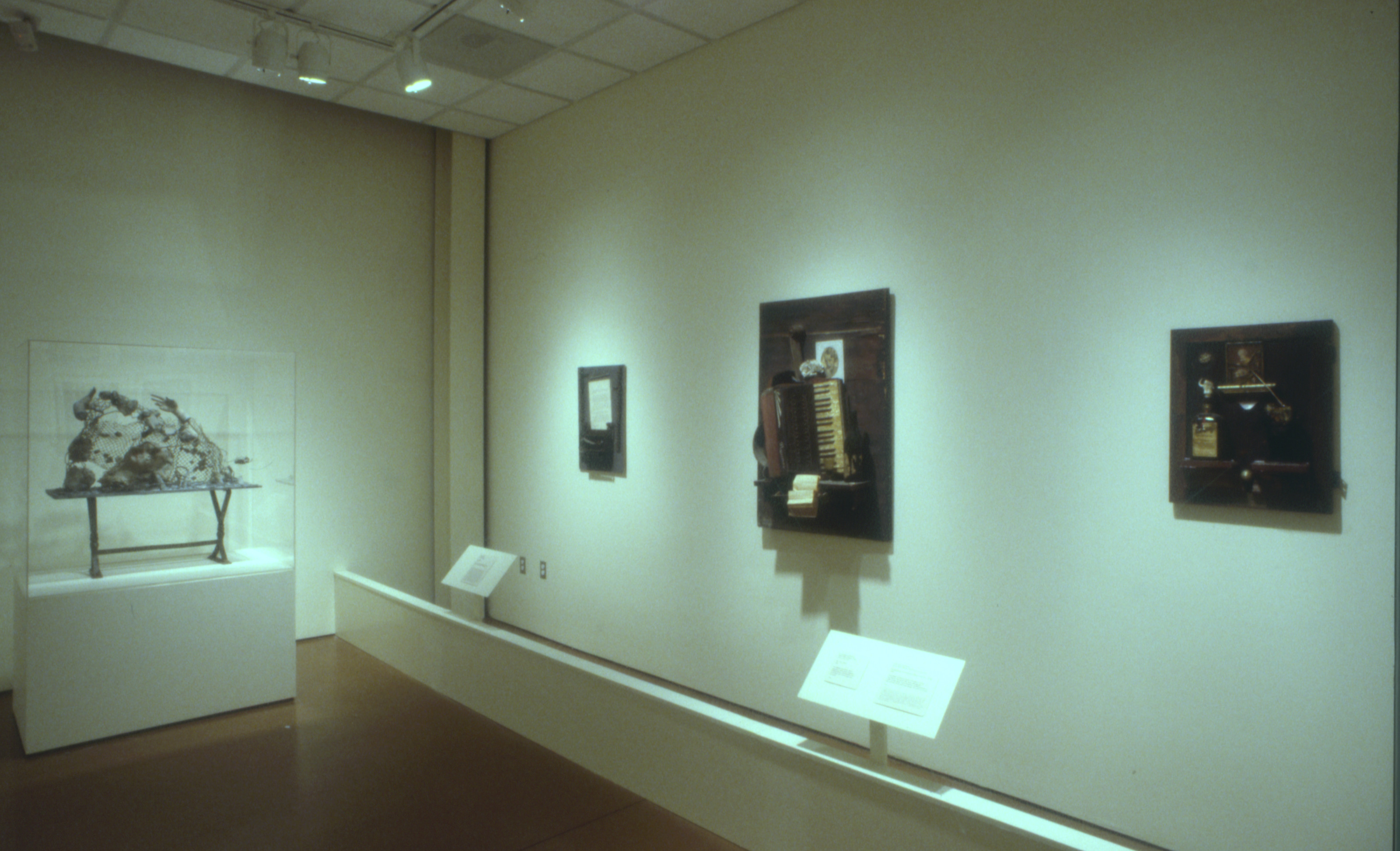
Installation photo featuring artworks from the exhibition The Sum is Greater than the Parts
Accordion Content
-
203-EXH-TEMP-BOX-103; exh-00021
203-pub-temp-box-147; 0013